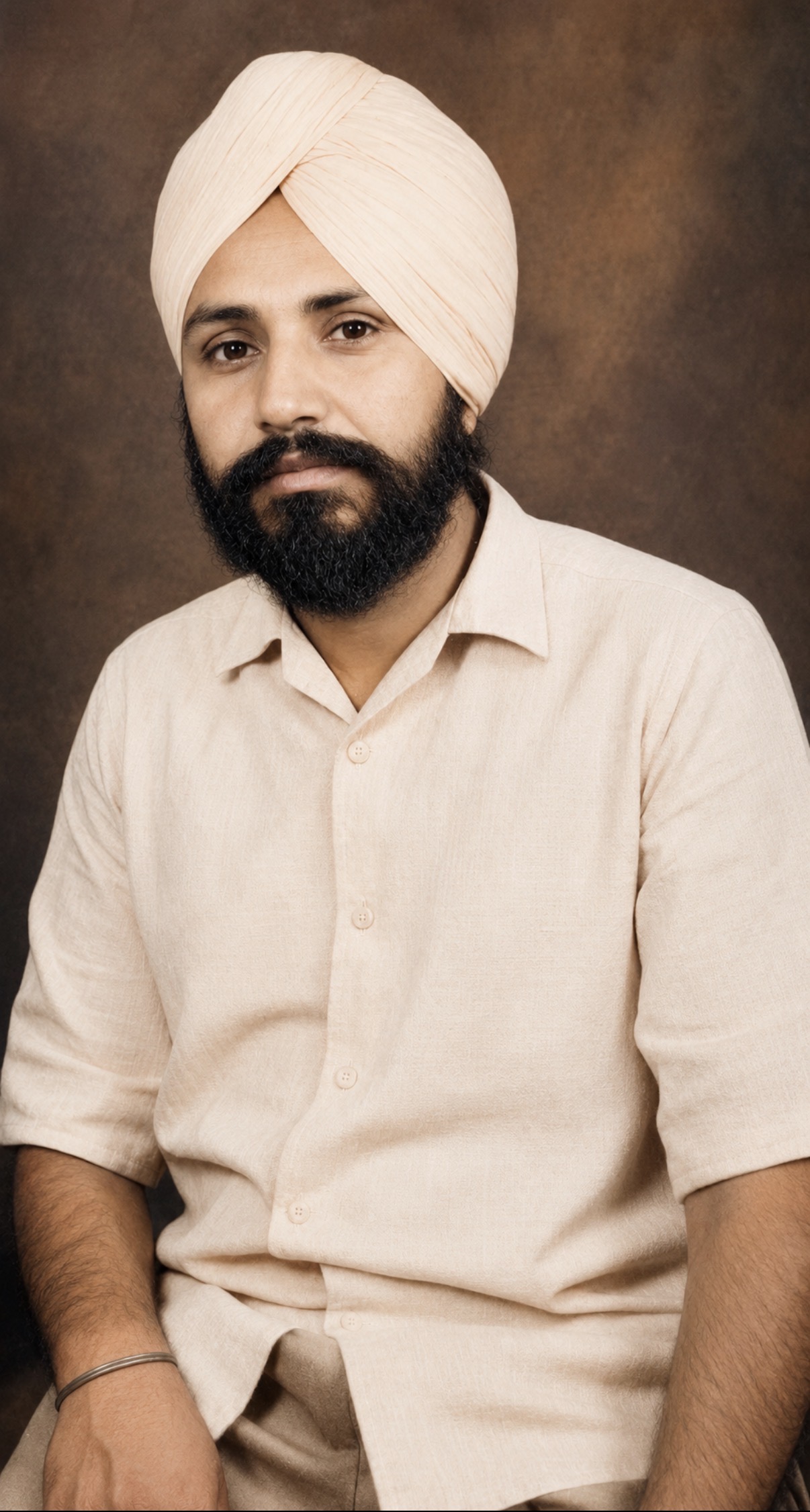
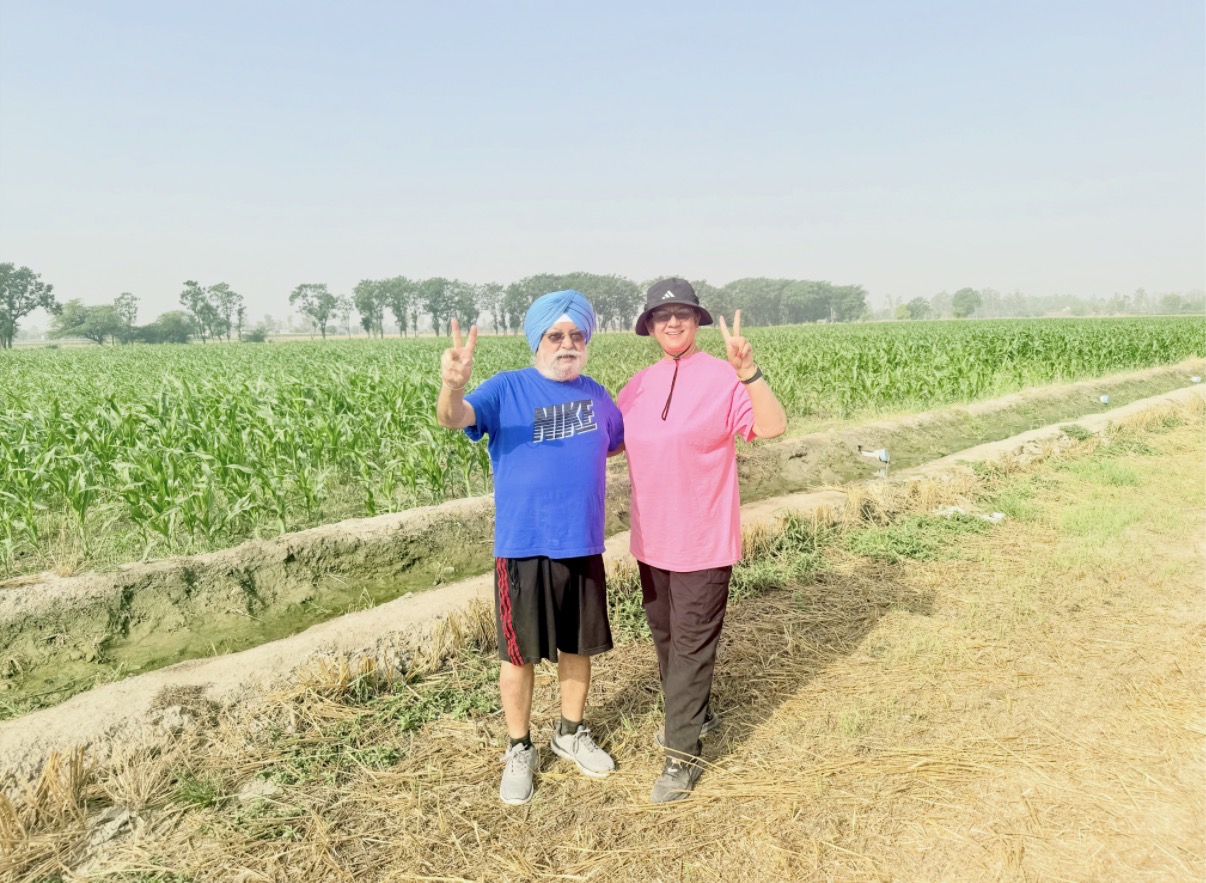
 Registering a First sign of Victory by reclaiming every inch of land on Maru parcel. Both Harvinder and me took the brunt to succeed finally.
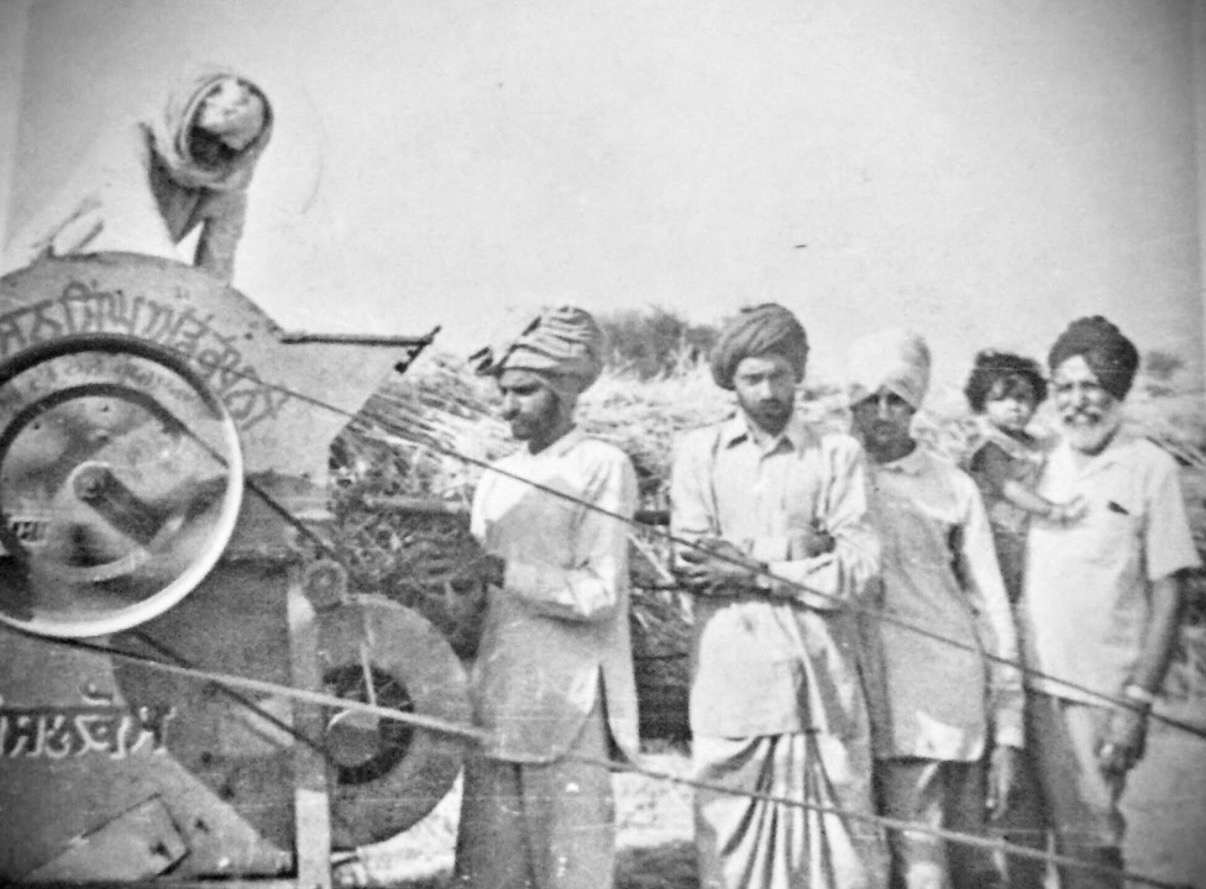
For nearly half a century, our family land in Village Badbar remained under cultivation, but its exact boundaries gradually became blurred. Ever since this land was allotted to our family in the erstwhile District Sangrur, my grandmother, father, and uncle farmed it in the traditional way, using bullock carts, manual labor, and time-honored farming methods.
Family Visits to Badbar farms
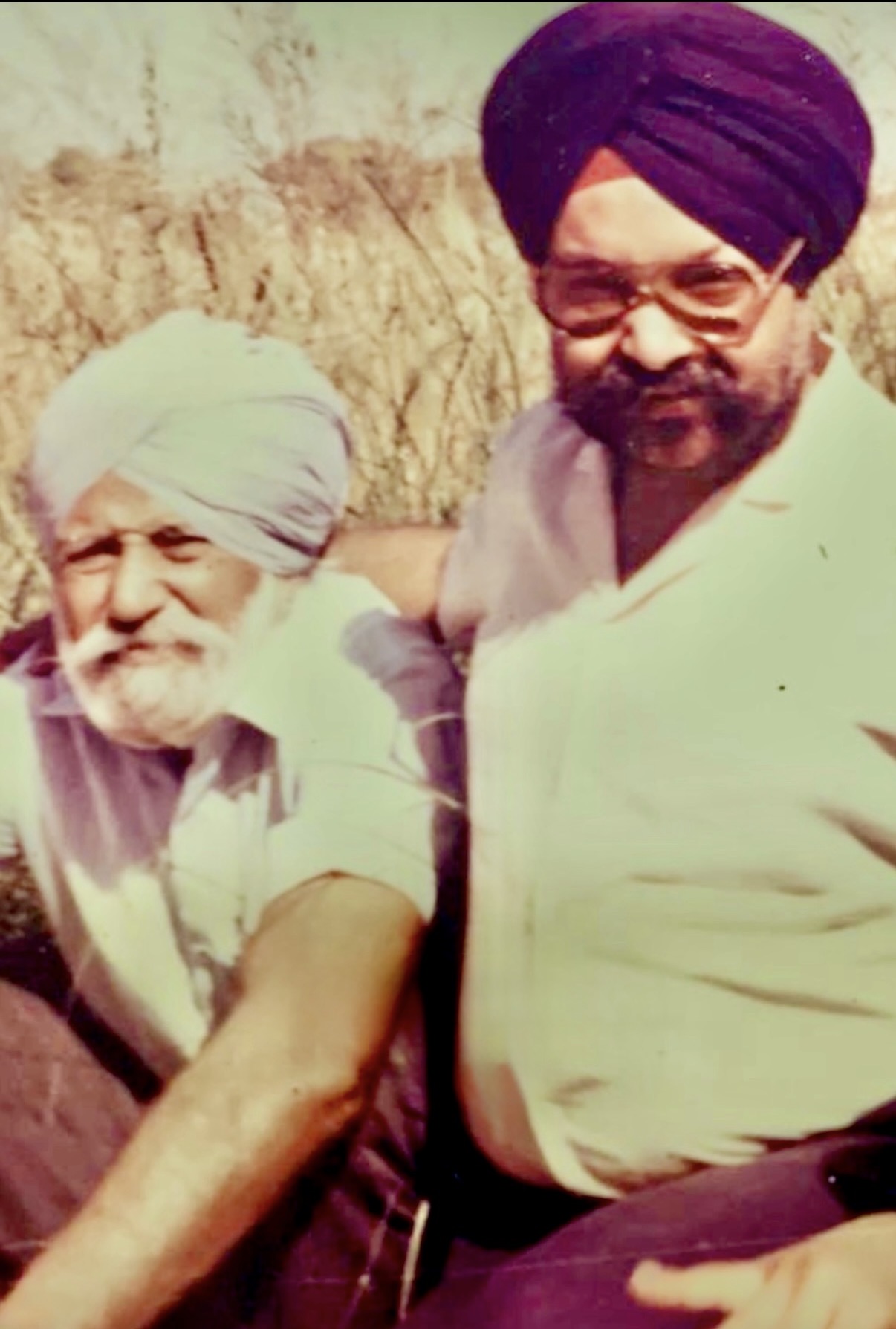 With my Dad Sardar Vasdev Singh in Nehri lands 1986
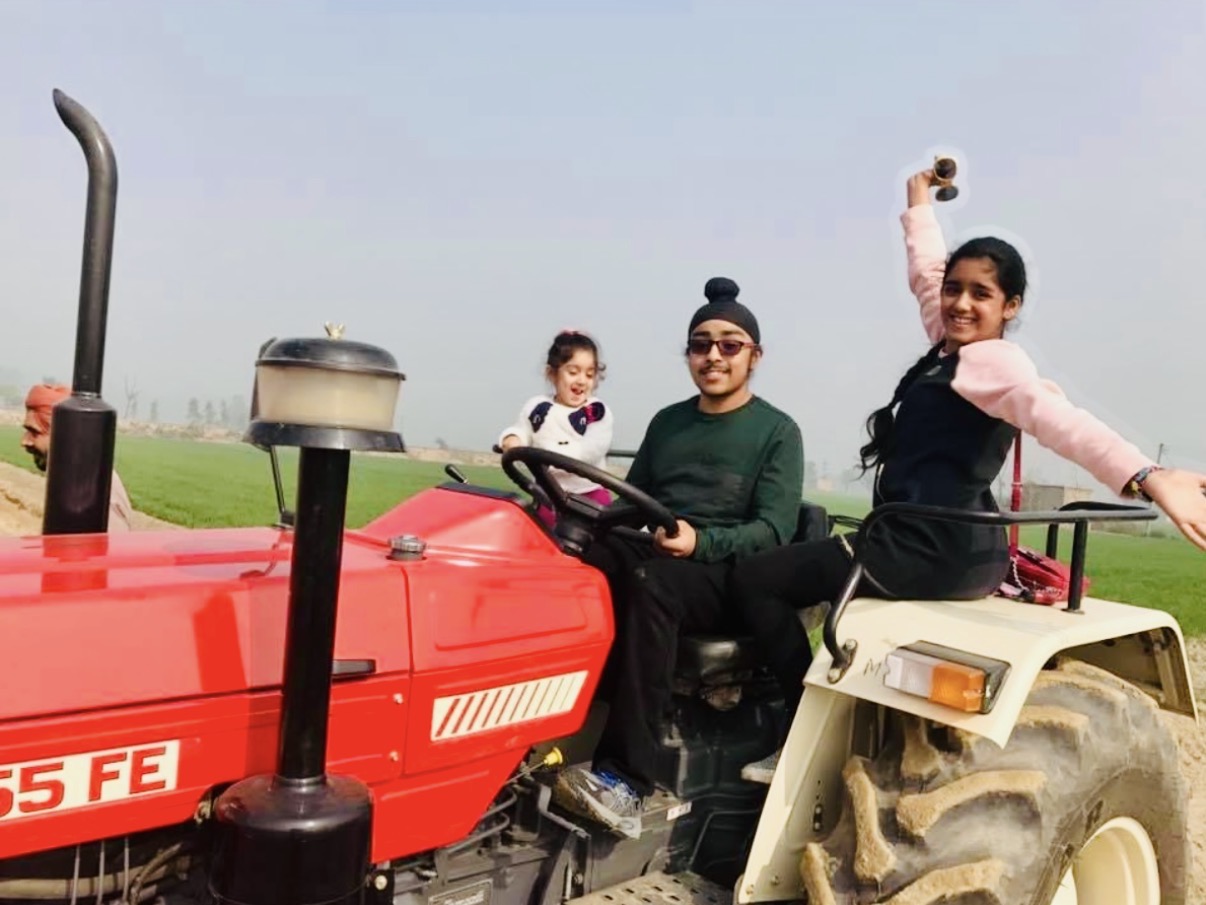
My grand children enjoying our tractor ride in Maru Land in Dec 2015
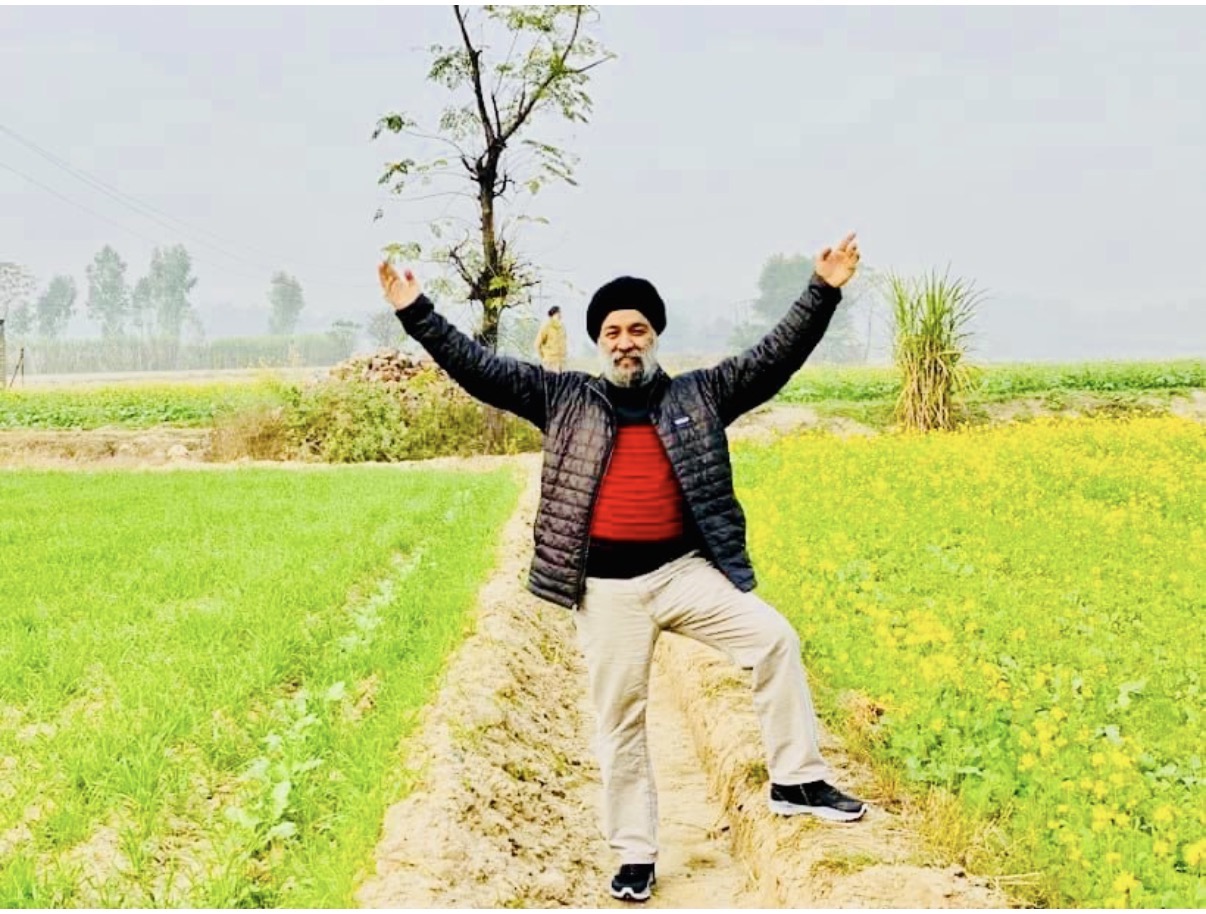 Our highly-educated Forbes lister walstreet Anslyst son Sardar Shivpreet Singh in 2019
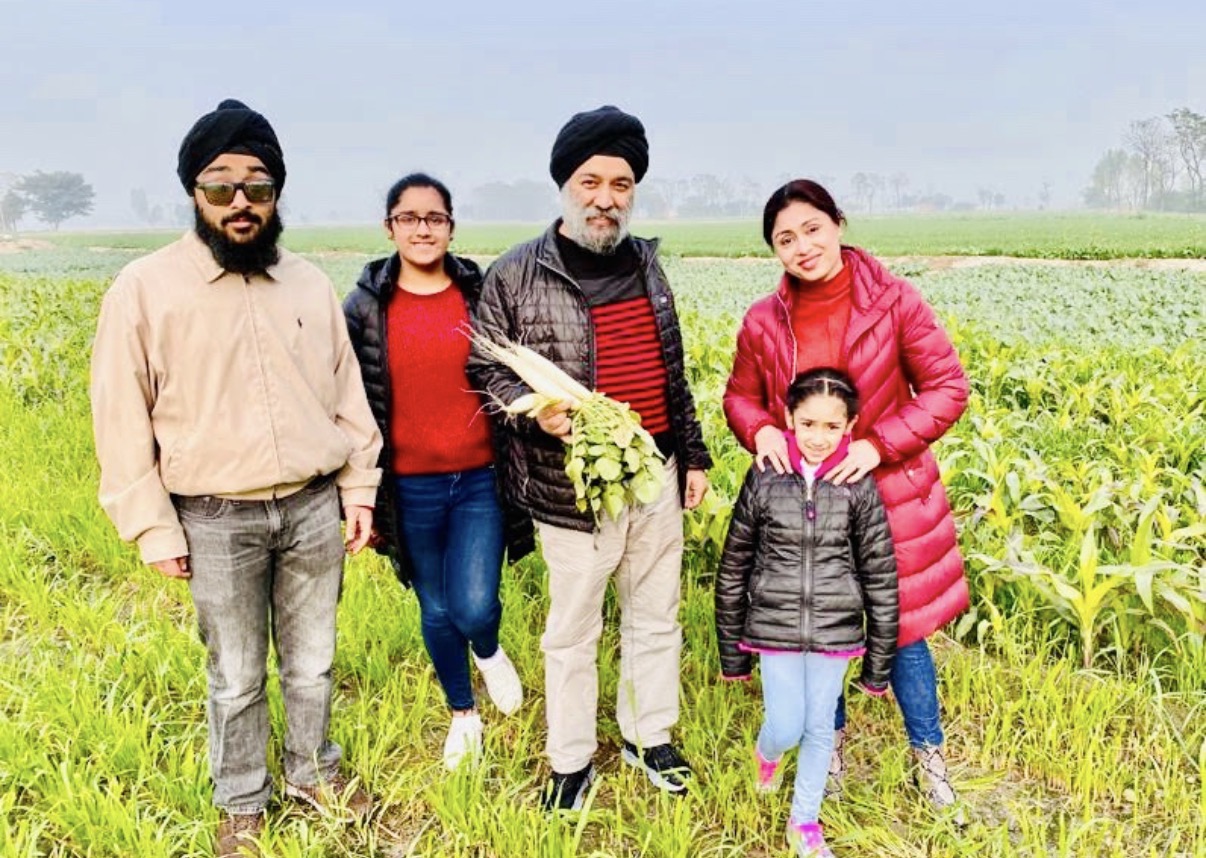
Sardar Shivpreet Singh with his wife Sardarni Dashminder (Shilpy) with their kids Gobind Singh, Jania and Geet in 2019
New Era Takes over
When I assumed responsibility for the land, I decided to modernize its operations. The era of bullock carts and manual transport gave way to tractors and mechanized farming. The “Nehri” parcel, as well as the “Maru” side, underwent significant improvements.
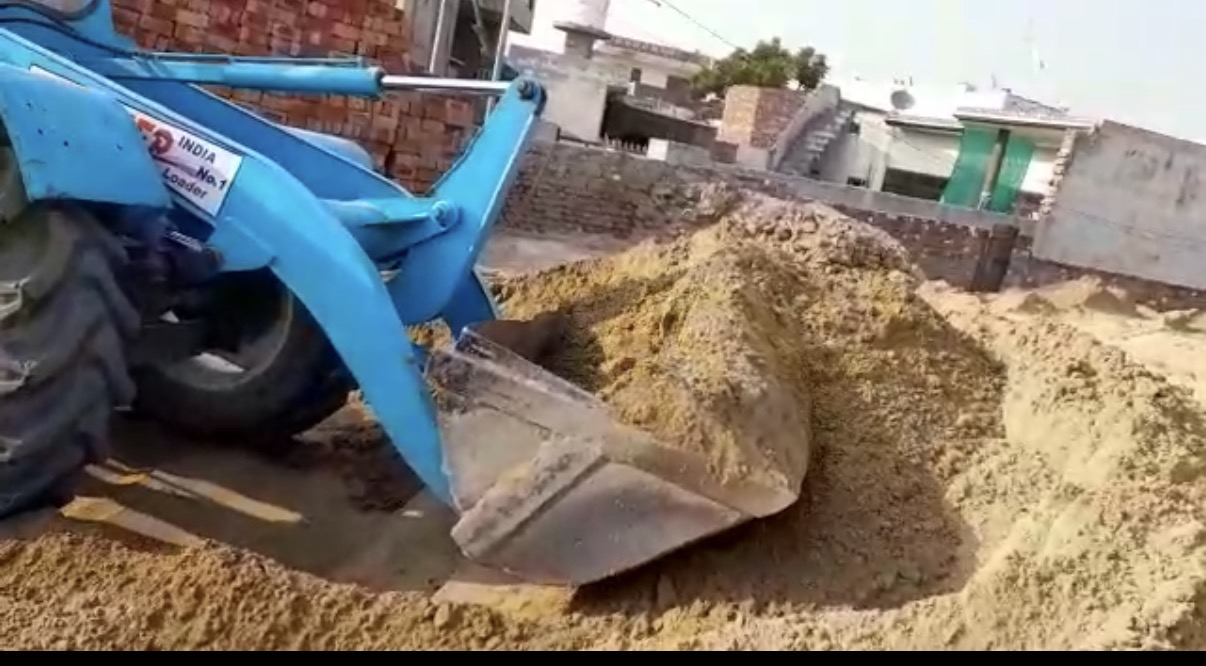
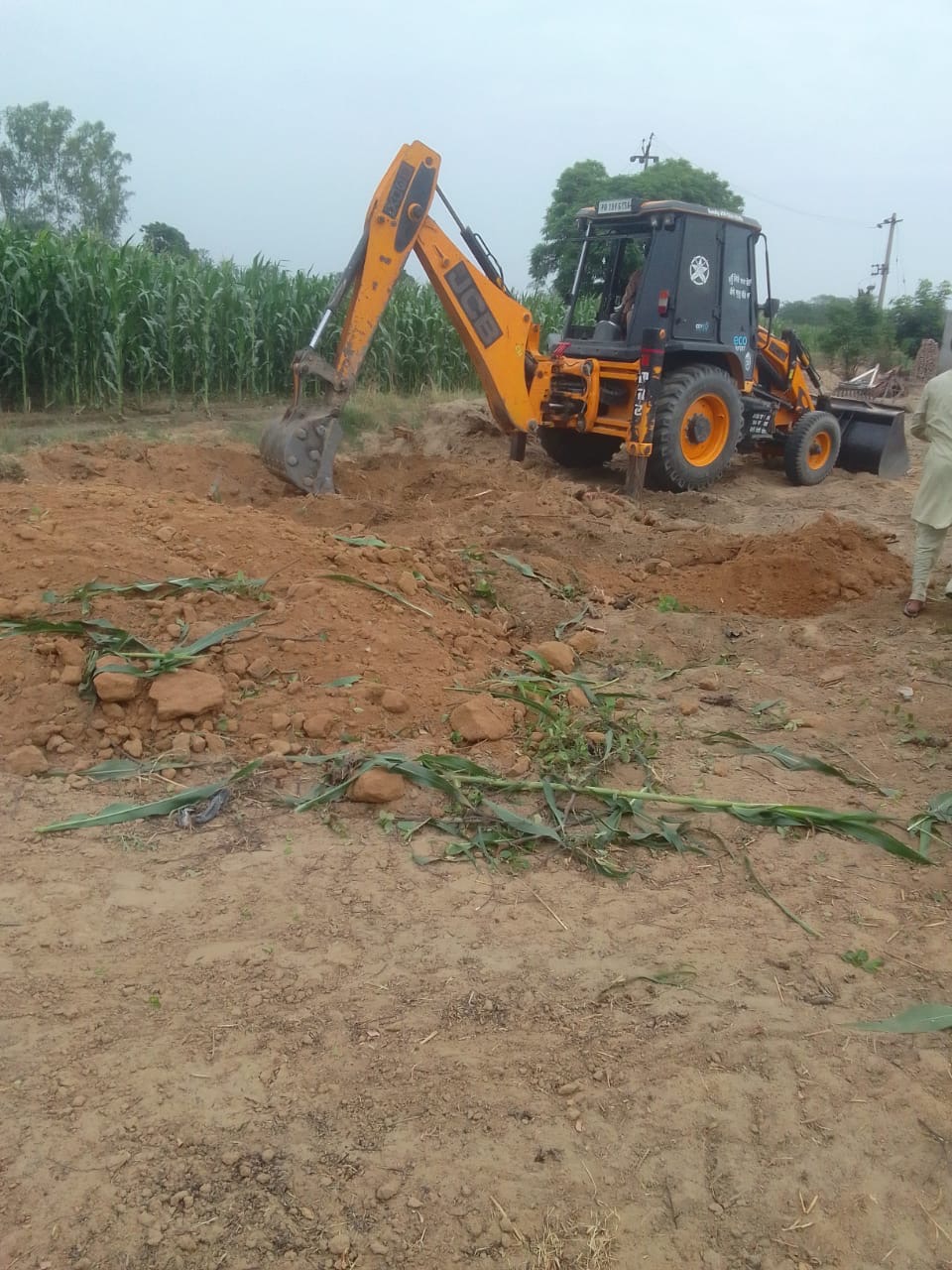
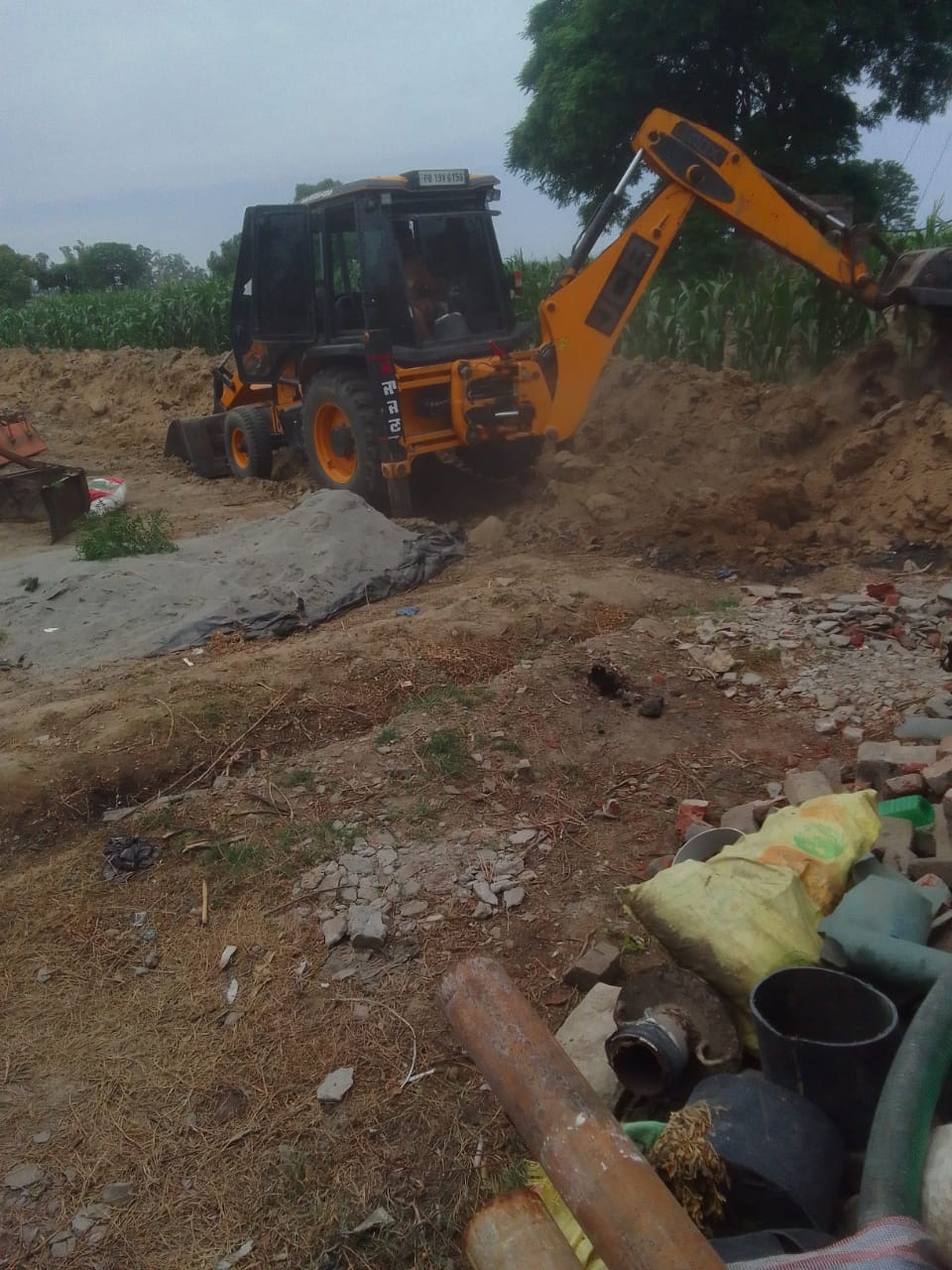
Heavy earthmoving machinery was deployed to demolish the old structure.
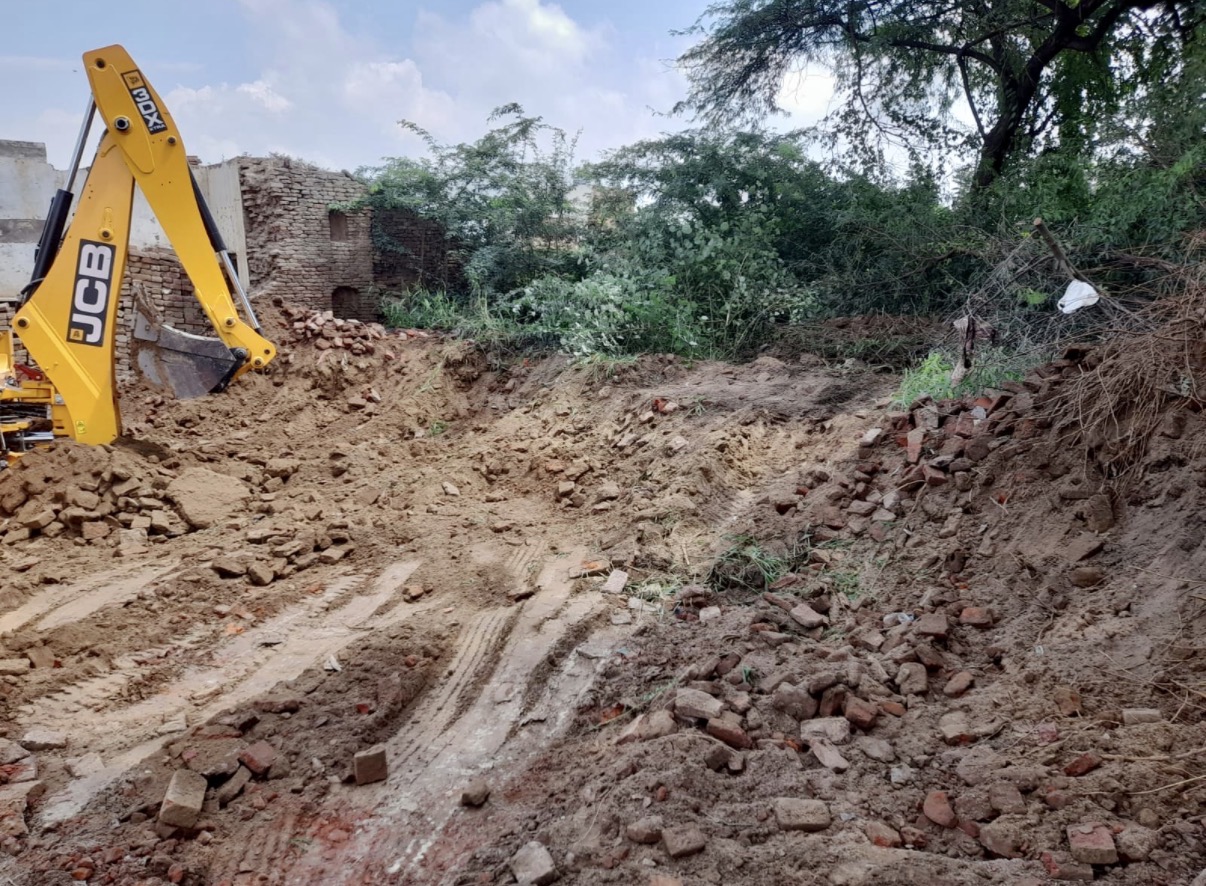
It was scary to work here manually as there were so May snakes, scorpios etc and we had to get them insured against poisoning bites.
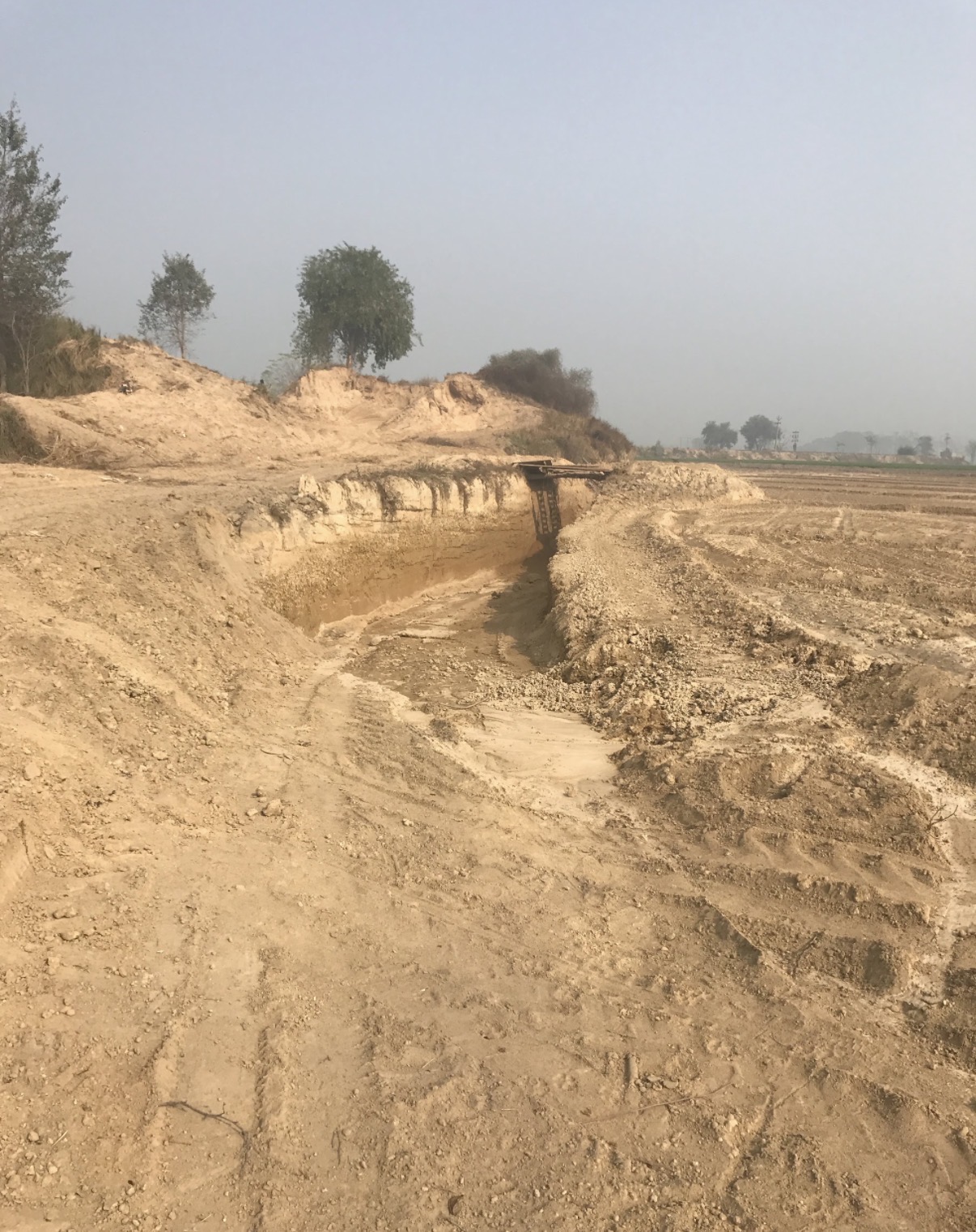
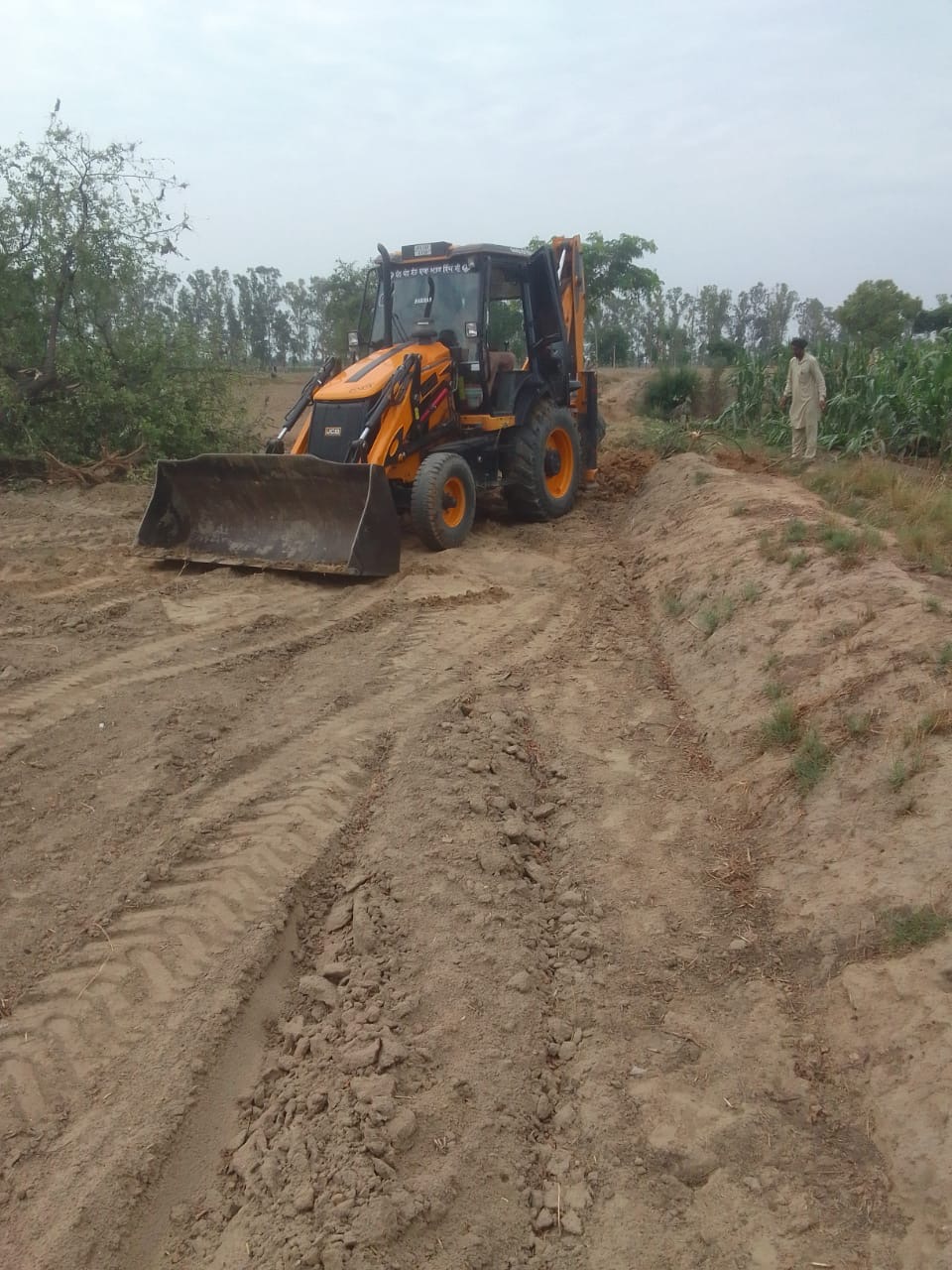
This hilltop was about 30 ft high and we had to make special efforts to level it.
On one side, there were large sand hillocks that had to be painstakingly leveled before cultivation could begin. It took considerable effort and investment, but eventually the land became fertile and productive.
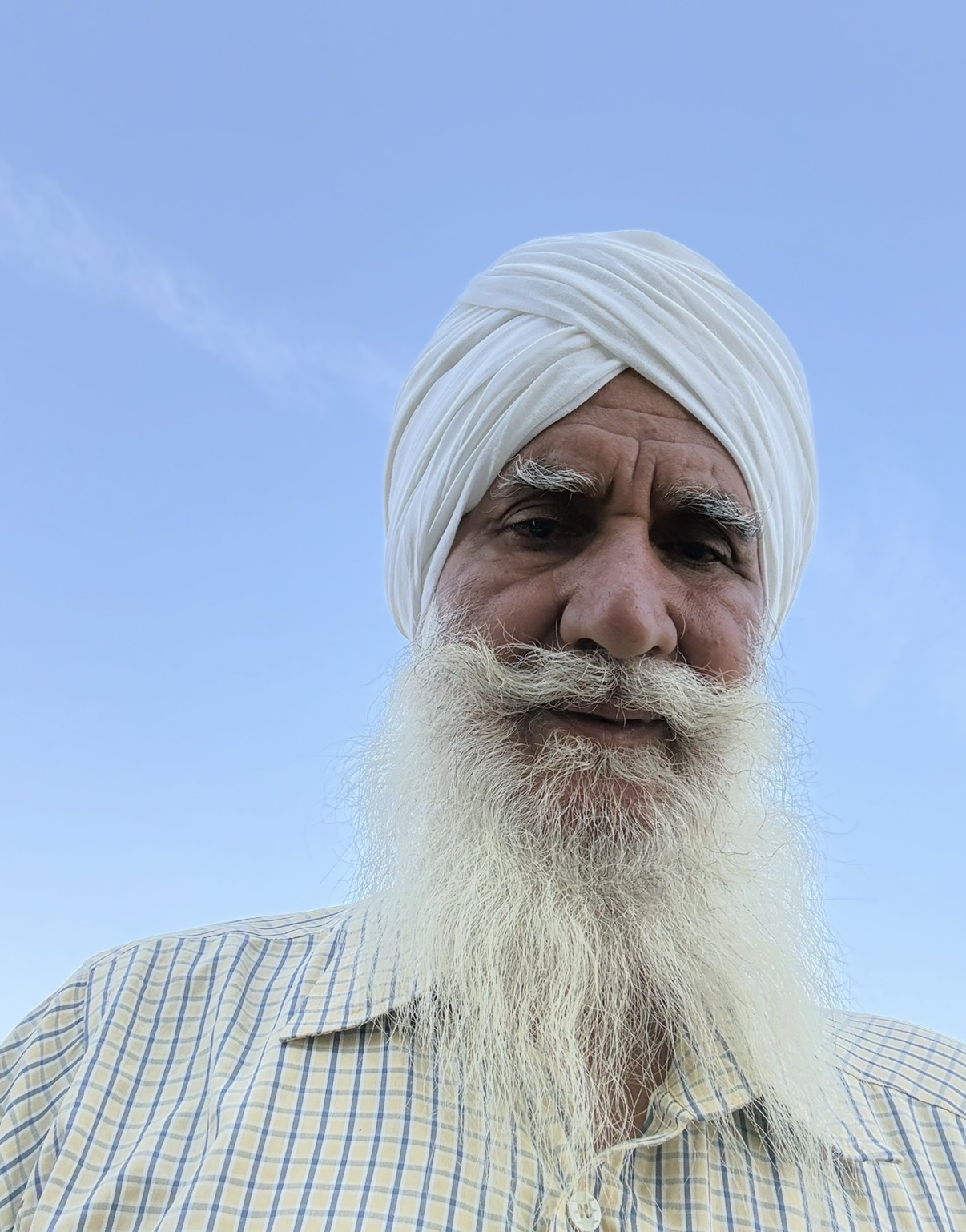
Our man behind my land development Meghraj Ji.
Since I was settled in the United States, the land was leased out to contractors who paid annual rent in advance.
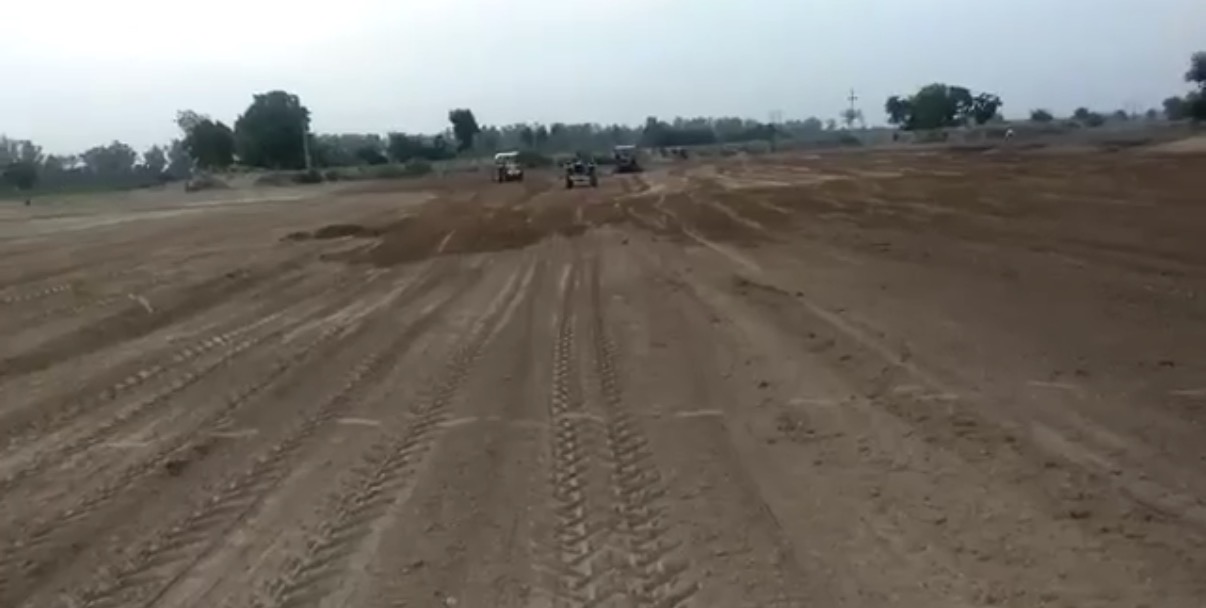
Multi heavy load machinery had to be used to level vast parcel of land for development
However, rumors persisted that portions of our land had gradually been encroached upon by neighboring farmers. I realized that unless I personally intervened, the true boundaries of my property would never be established. Moreover both parcels of my land were in the end of village Badbar border- village Bhureke in Nehri and village Harigarh in Maru thus the making it more complicated as revenue officers and village Panchayat were different.
Village House demolished
To support my efforts, I decided to build a permanent residence in the village. The old ancestral house was bulldozed, and rebuilding it became a long and difficult project.
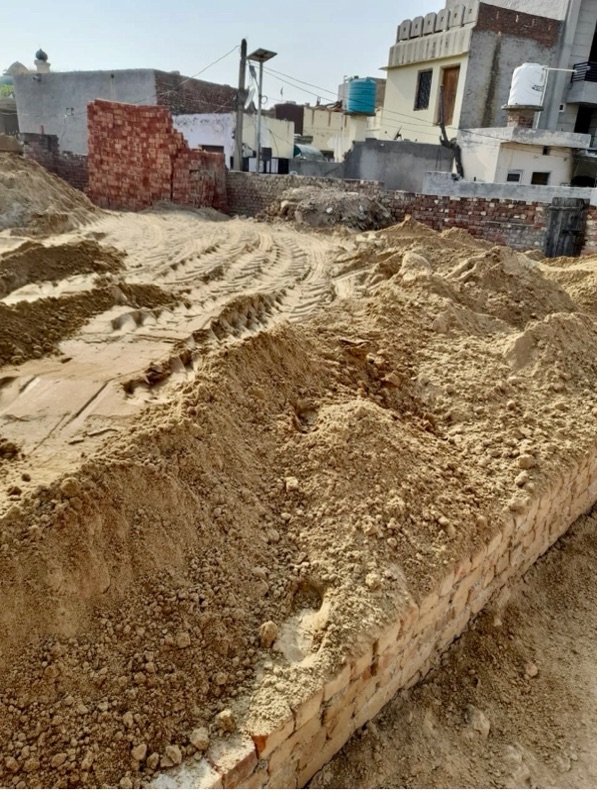 We had to dump in about 25 dumpers of earth to even up two levels of house
Our favorite Arti Pawan Kumar helped me build this nice and cute house in the village. It took nearly thirteen years before the new house was finally completed during the COVID period. His assistant Jasvir Singh has been on the top of all our demands of house hold or demarcation needs day-in and day-out.
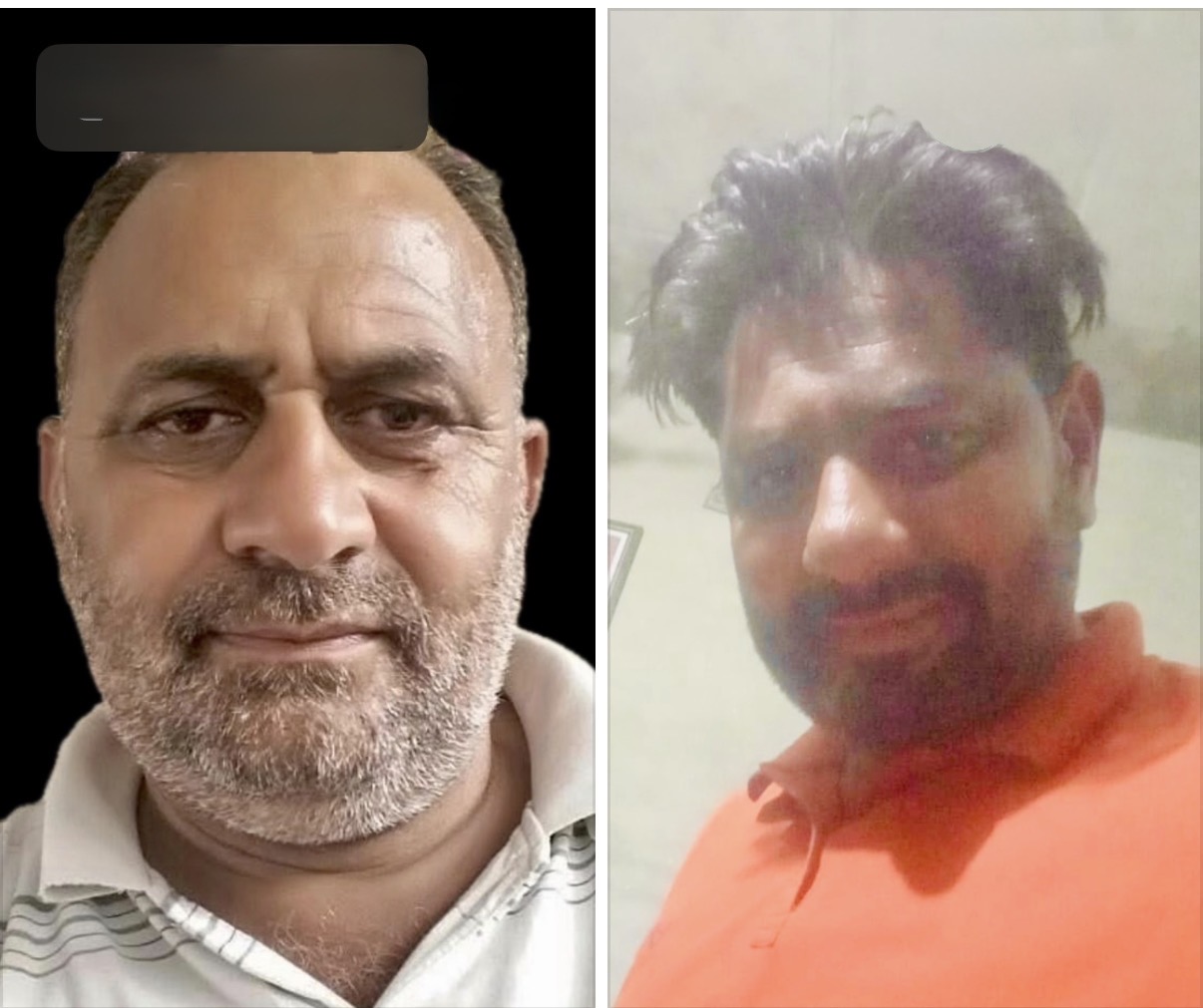 Pawan Kumar and his assistant Jasvir Singh
Pawan Kumar has a knack for construction and made excellent efforts for quality assurance. No leakage of any sort in last five years of house building. Pawan Kumar’s respected mother laid the foundation stone of our house.
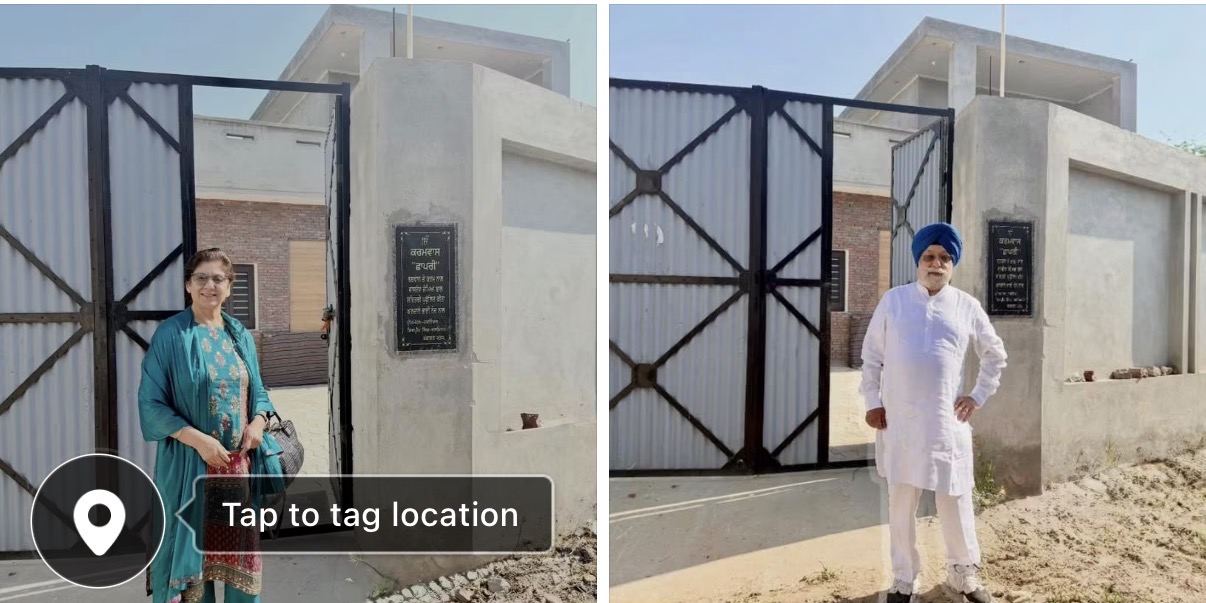 Sardarni Harvinder Kaur and Sardar Preetmohan Singh at the entrance
At last, I had a place where I could stay overnight and personally supervise matters relating to the land.
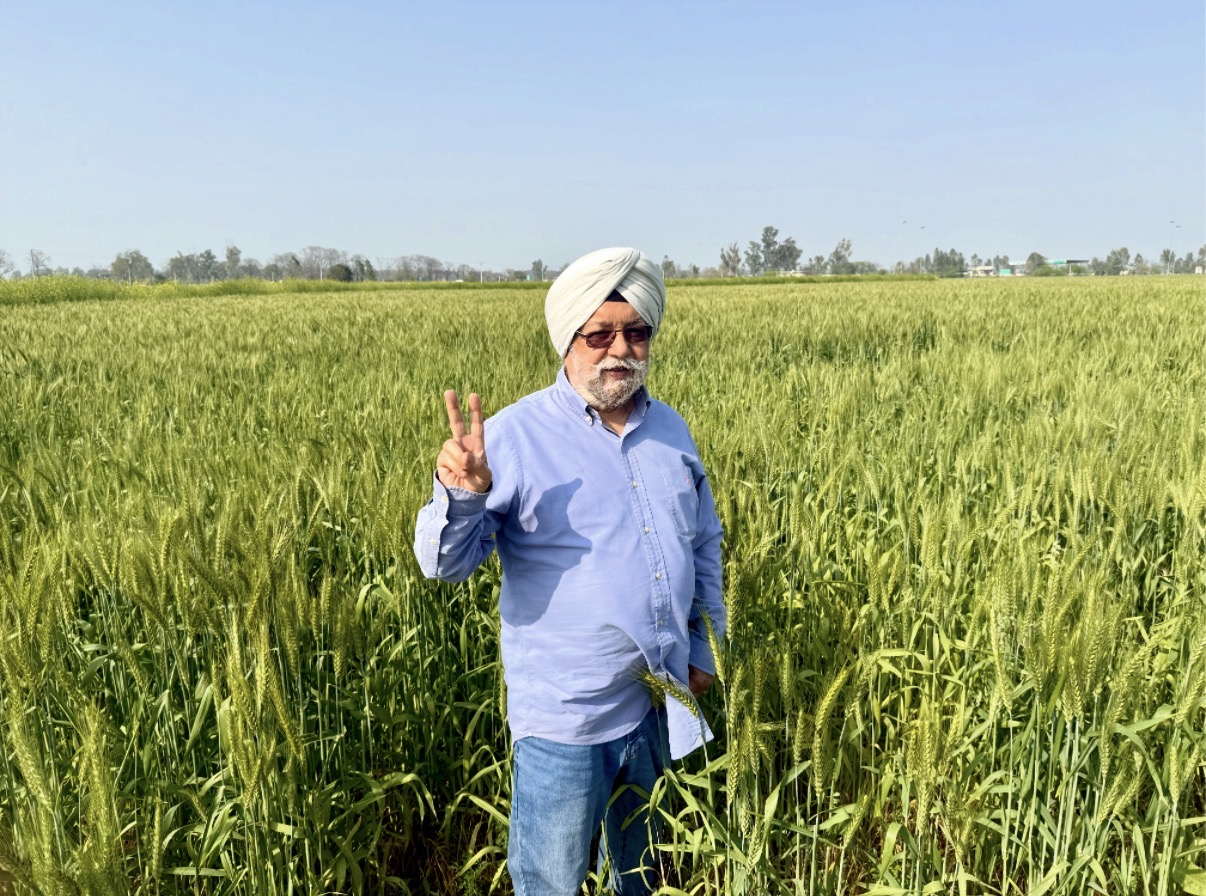 Wheat just before turning golden in Mar 2025
Our First Attempt for Demarcation in May 2013
My first serious attempt at demarcation was in May 2013. Through the help of a close IAS officer friend and a joint Secretary with Punjab Government, the Deputy Commissioner of Barnala was approached.
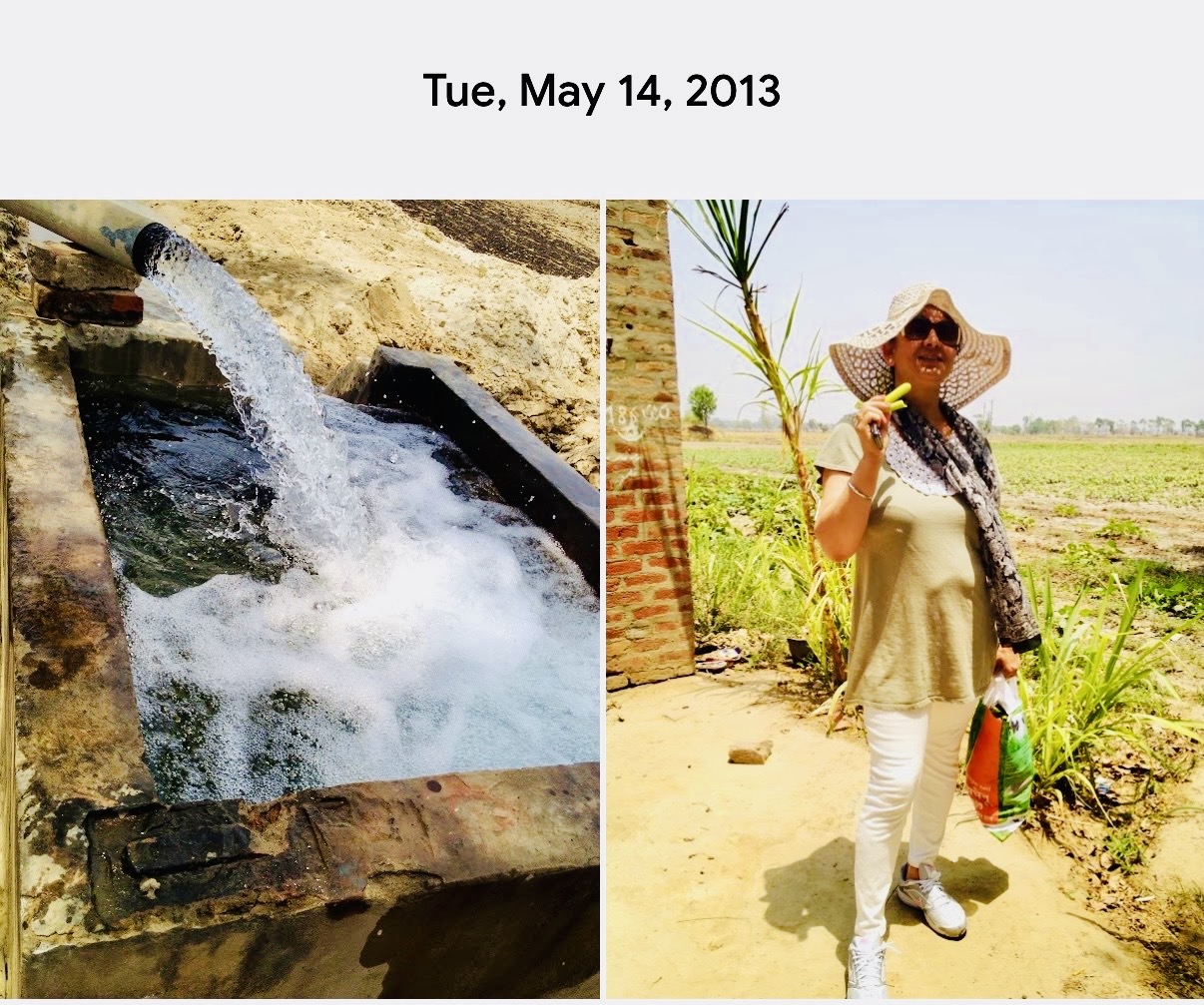
We took that measurement rather casually with a though the Dyputy Commissioner word will set everything straight. But that was not to be.
A Kanugo was directed to carry out measurements. The exercise was completed in half a day, and I was informed that there was little discrepancy. However, local people later advised me that the measurements had not been properly enforced, and the actual situation on the ground remained unchanged.
Our Second attempt in Mar 2025
In 2025, after my village house had become fully functional, I made another determined Second effort. With assistance of a close family friend and an IPS officer in Punjab Police, the land was measured through satellite technology and permanent boundary markers, known locally as “Burjis,” were installed. For the first time, I clearly saw how much of my land had been under the possession of neighboring farmers for decades.
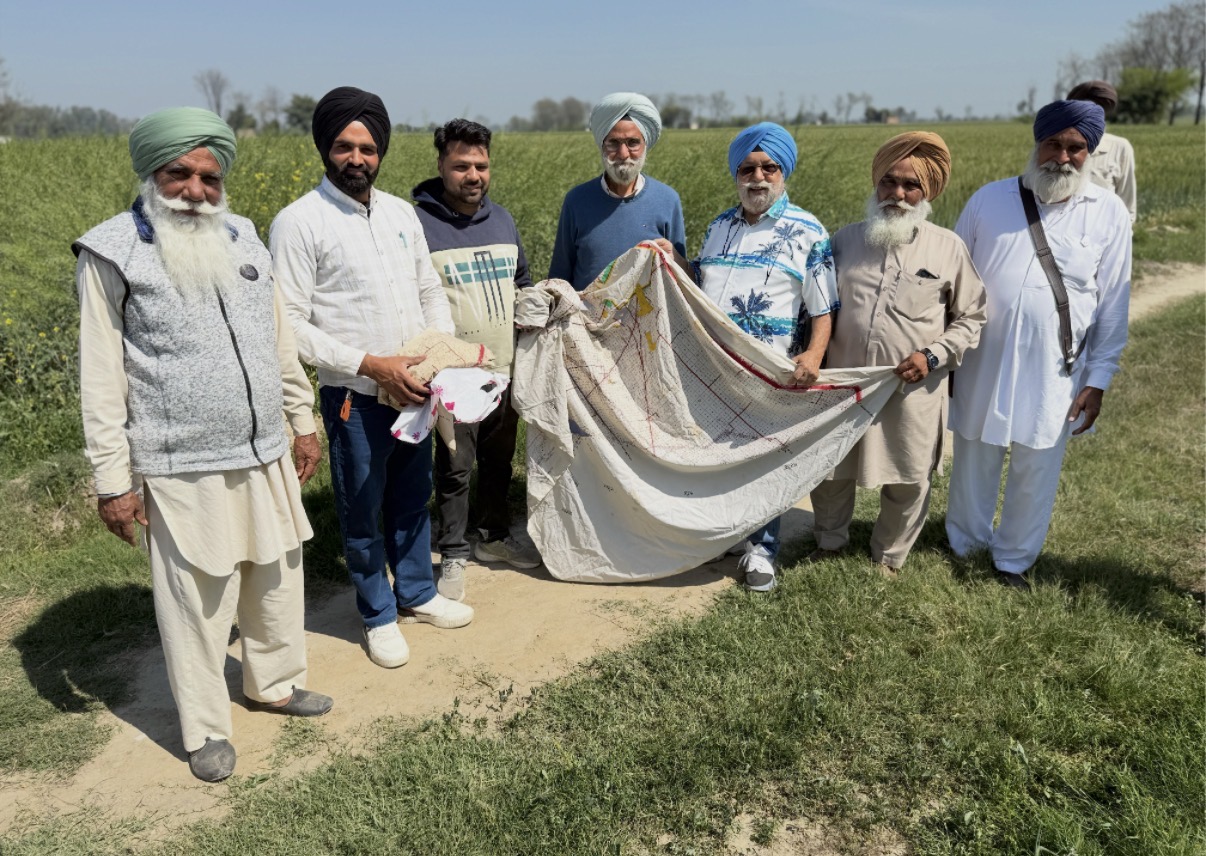
The signature cloth map of the village is spread out with Patwari and s Gurpreet Singh Kanugo supervising the same. This revenue records are being maintained since Mughal emperor Akbar days by his Rebenue minister Raja Todar Mal. They were flawless and even the English with modern management tools could not find fault with them.
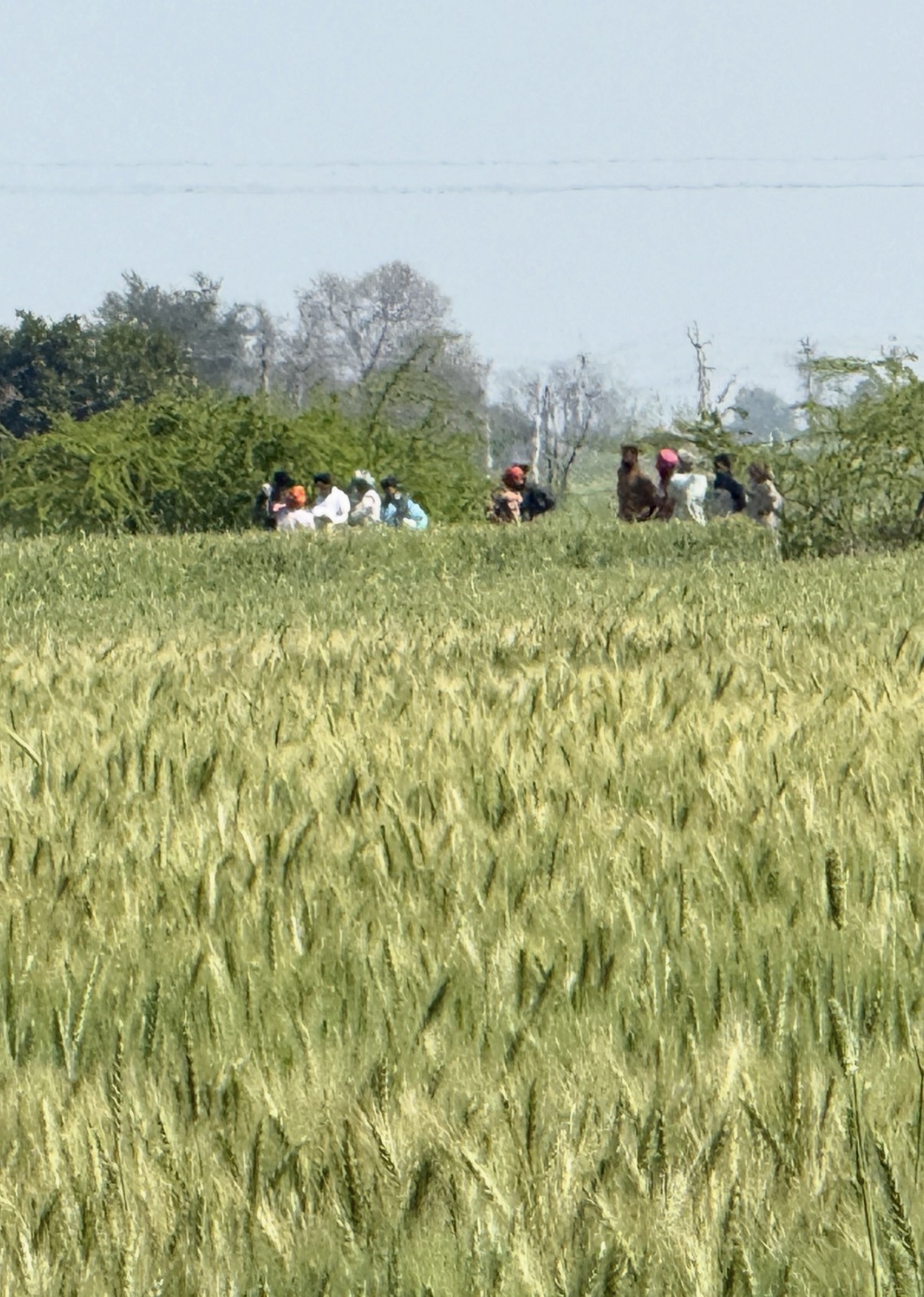
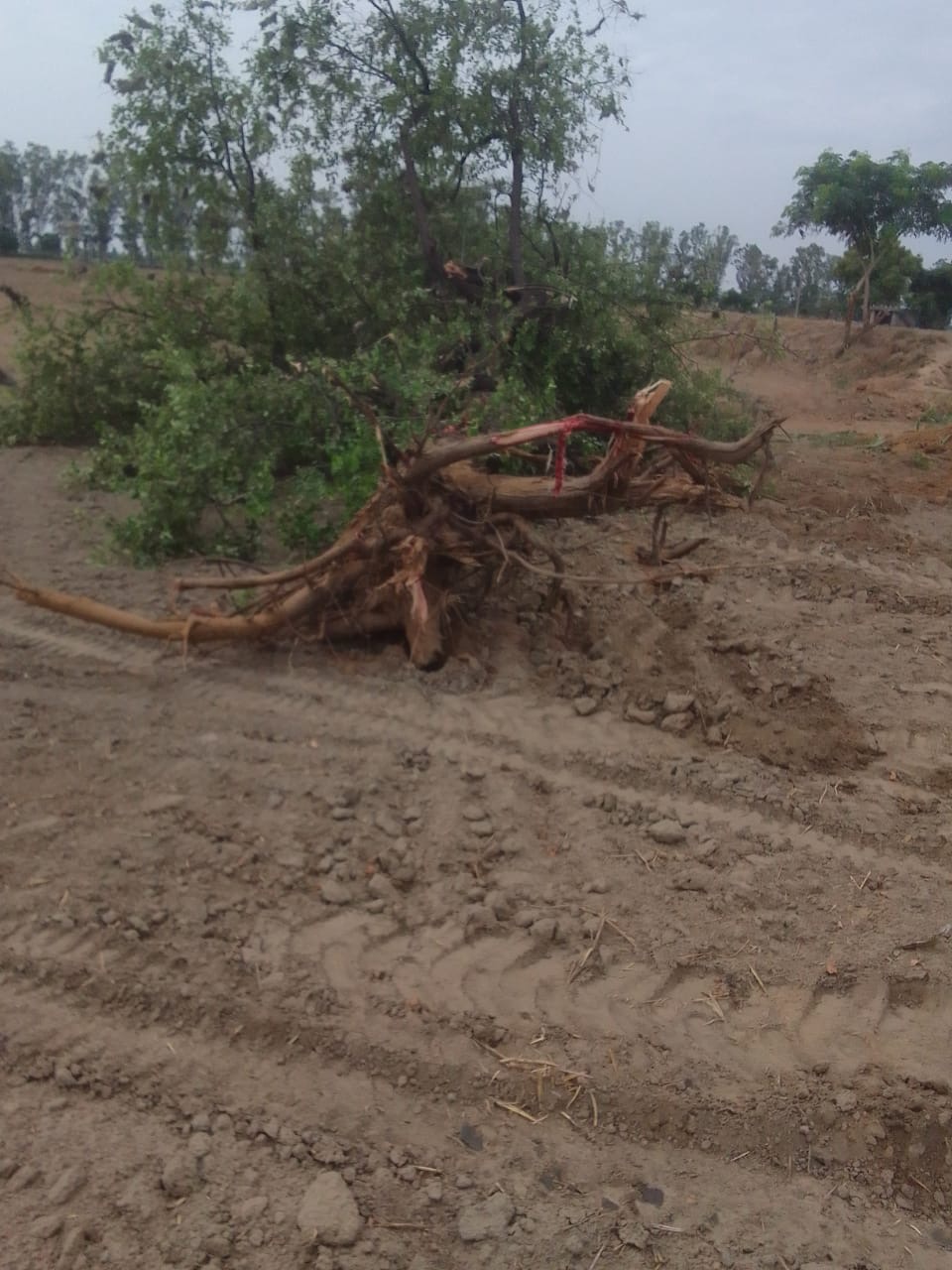
The neighbors had encroached do derp into my lands. On Hargadh village side, a big piece of land had been taken away and collectively uprooted the Burgees.
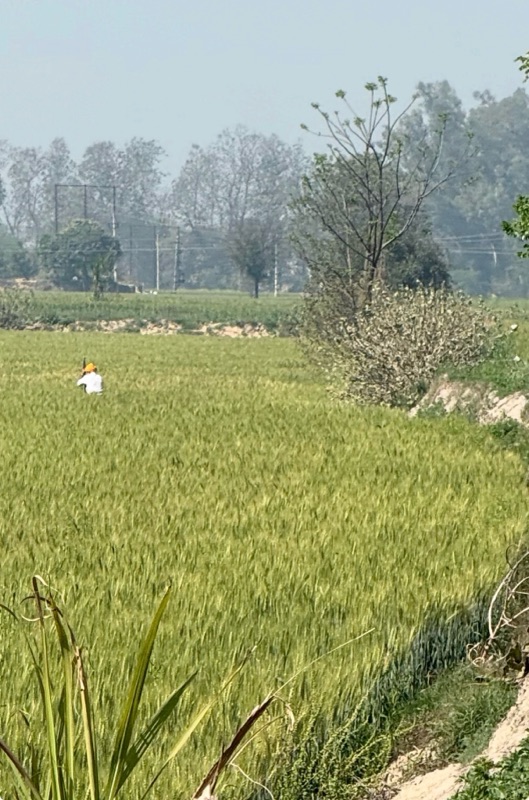
How deep the neighbor had encroached our land but this gentleman decided to hand over the possession immediately
One neighboring landowner, a retired school teacher caring for his daughter’s land while she lived in Canada, immediately acknowledged the measurements. He openly stated that he had no interest in occupying anyone else’s property and voluntarily returned nearly three-fourths of an acre to me. His honesty and integrity left a deep impression on me.
Unfortunately, other encroachers were not so cooperative. Soon after I returned to the United States, several boundary markers were uprooted and thrown away. Despite complaints, little action was taken, and I was forced to leave the matter unresolved.
The real issue was not merely demarcation, it was the recovery of land that has been under encroachment for many years. Getting it released was often compared to taking food out of lion’s mouth.
Third & Final attempt again in May 2026
Rather than give up, I chose a different path. I became actively involved in village welfare through our family’s support of educational scholarships, flood-relief programs, and community development initiatives. Through DhunAnand Foundation, we provided monthly grocery supplies to flood-affected families and encouraged educational excellence among village students. These efforts helped build goodwill and trust within the community.
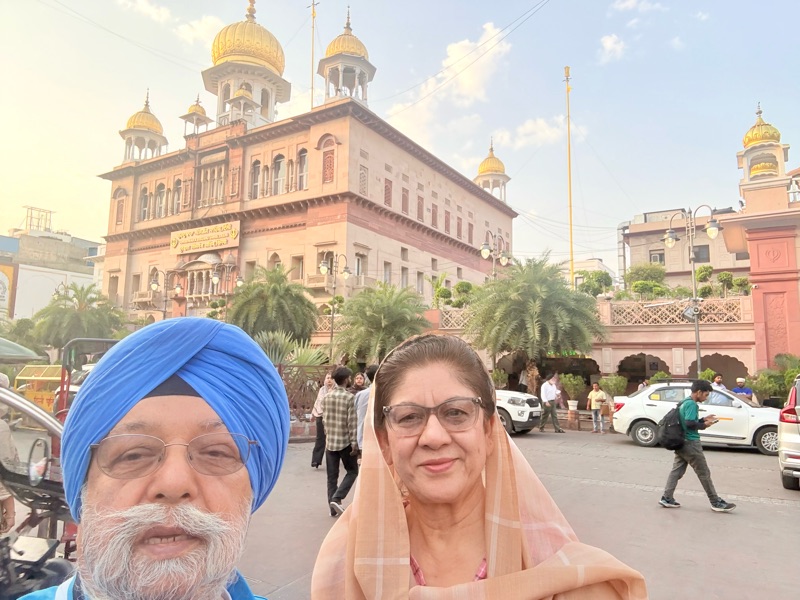
A good and clear view of Sis Ganj Gurdwara Sahib, Chandni Chowk Delhi as there was very less Sangat so early in the morning.
On May7 2026, I returned to Punjab again along with Harvinder, determined to make a final effort. Before starting the journey, we went to Sis Ganj Gurdwara Sahib, Chandni Chowk Delhi to pray Ardaas for success of our efforts. Harvinder and me both planned the
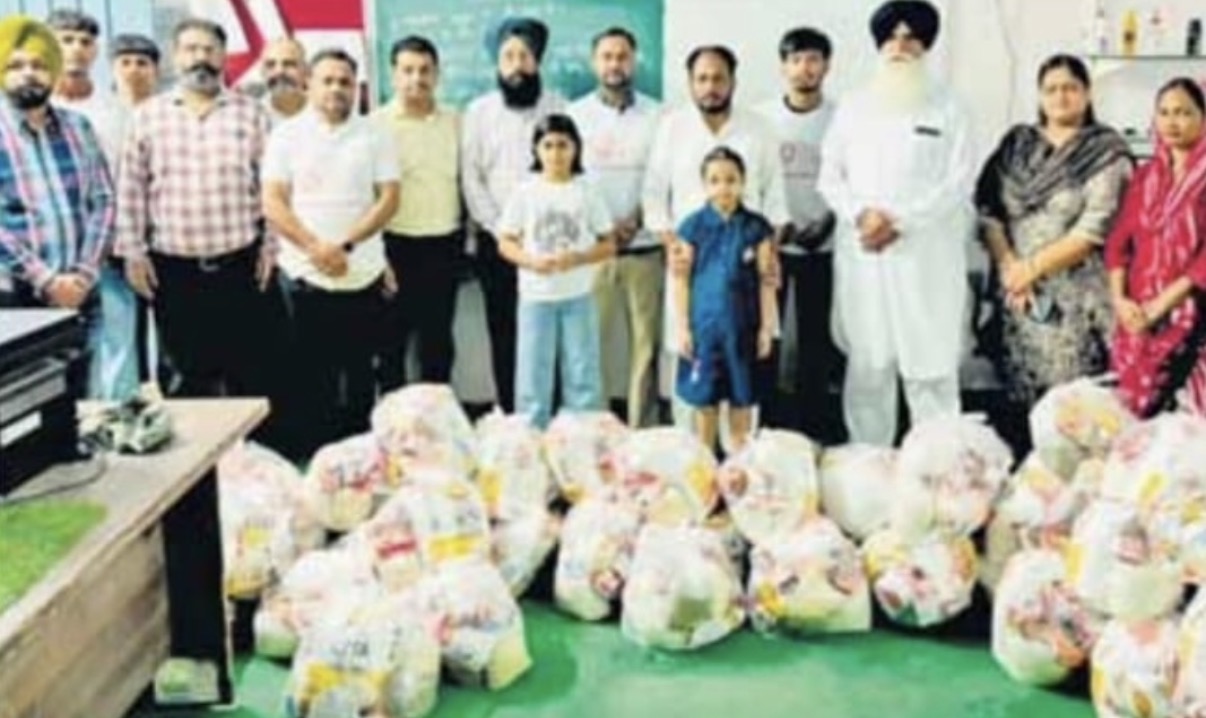 Our donations to 60 flood hit families in village Badbar.
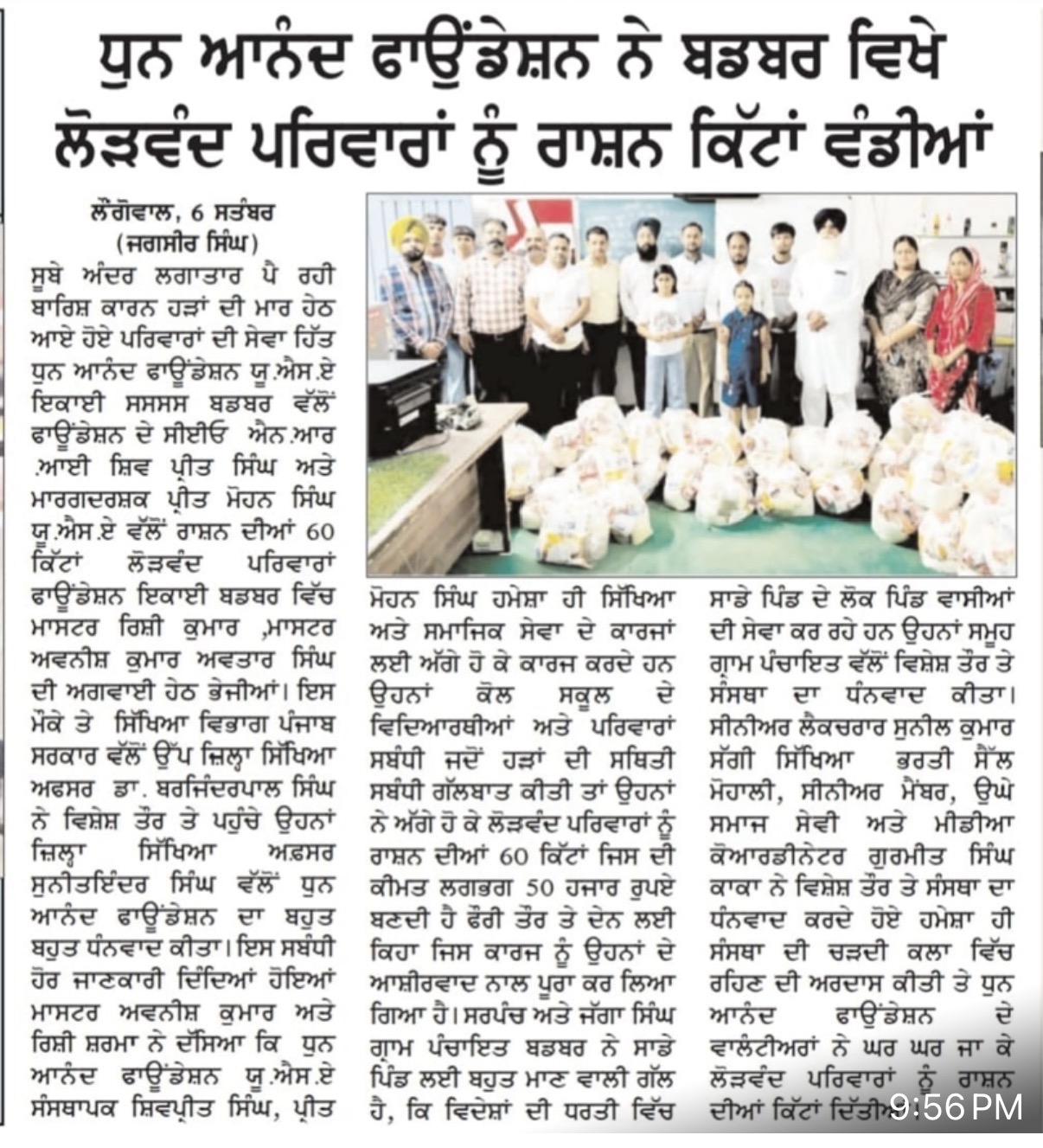
The local Newspspers published our efforts with great Zeal.
This time, I planned everything meticulously. The wheat crop had already been harvested, leaving the fields vacant. Fresh demarcation was ordered through the Tehsildar’s office. Approximately ₹50,000 was spent on government fees, satellite surveys, and measurements.
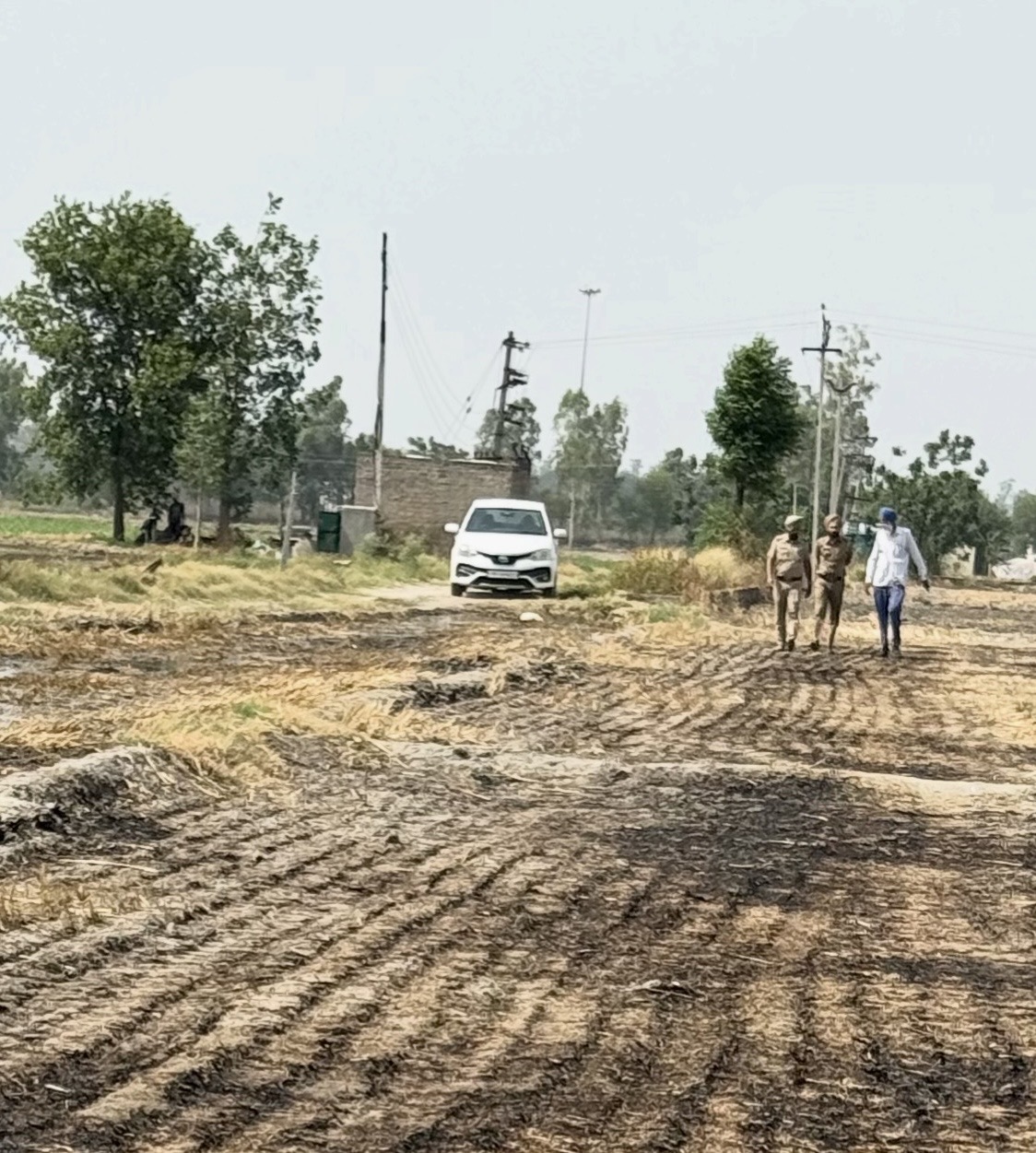
The Police was requested to inspect the site of dispute.
The result was exactly the same as before. Satellite technology confirmed the same boundary lines that had been identified earlier. New boundary markers were installed.
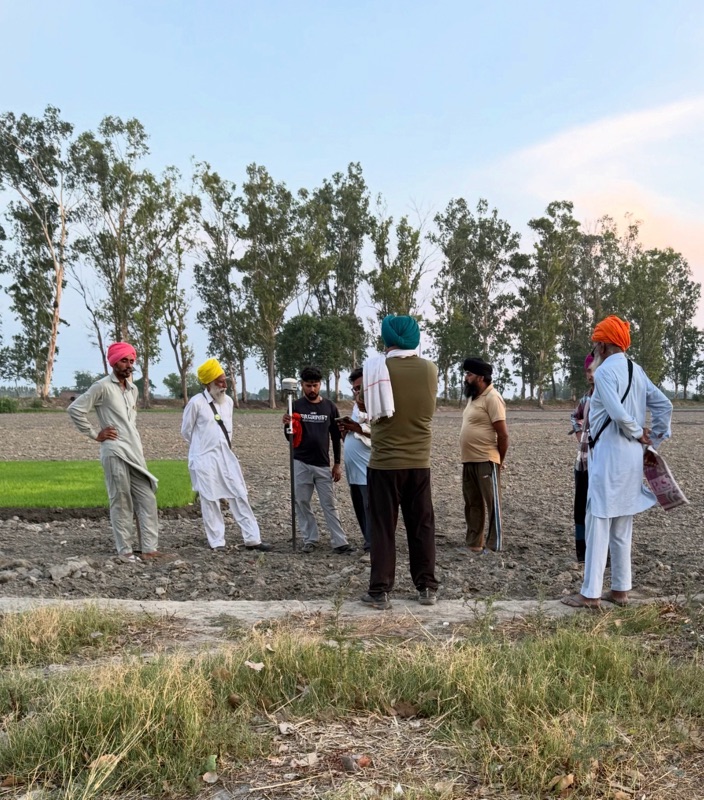
On site discussions to sort out the measurement when Jwala Pardhan of Kisan Mirchandani mediated and helped to draw ‘What’ the form boundary between the contestants. Mistri family still had doubts and wanted to do demarcation on their own again. They are supposed to shell out 19000 for the same.
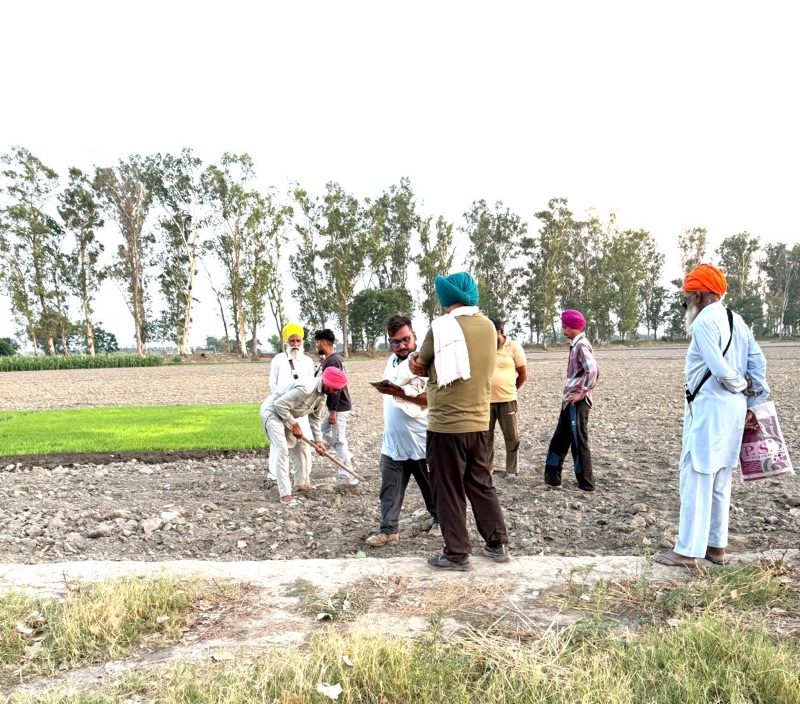
Boundaries being relaid by our man Hakam Singh.
Learning from past experience, I simultaneously approached the local Deputy Superintendent of Police and filed a written complaint regarding possible obstruction and encroachment. The complaint was marked to the SHO of Dhanaula Police Station, who proved exceptionally fair and helpful.
The SHO personally visited the sites, inspected both parcels, and listened to all parties. He summoned nearly twenty neighboring landowners to the police station and conducted discussions in a transparent manner. I made it clear that I was simply seeking possession of land that legally belonged to me.
The Maru Parcel Demarcation:
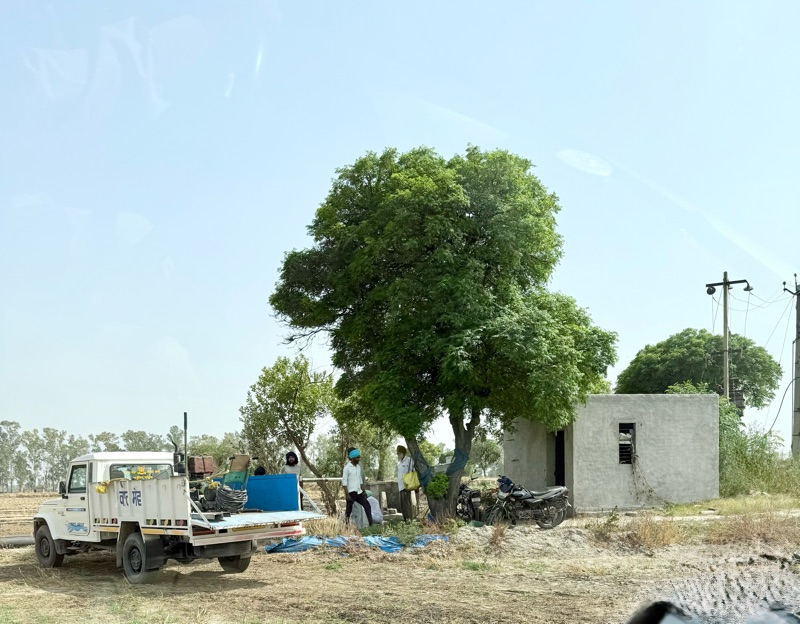
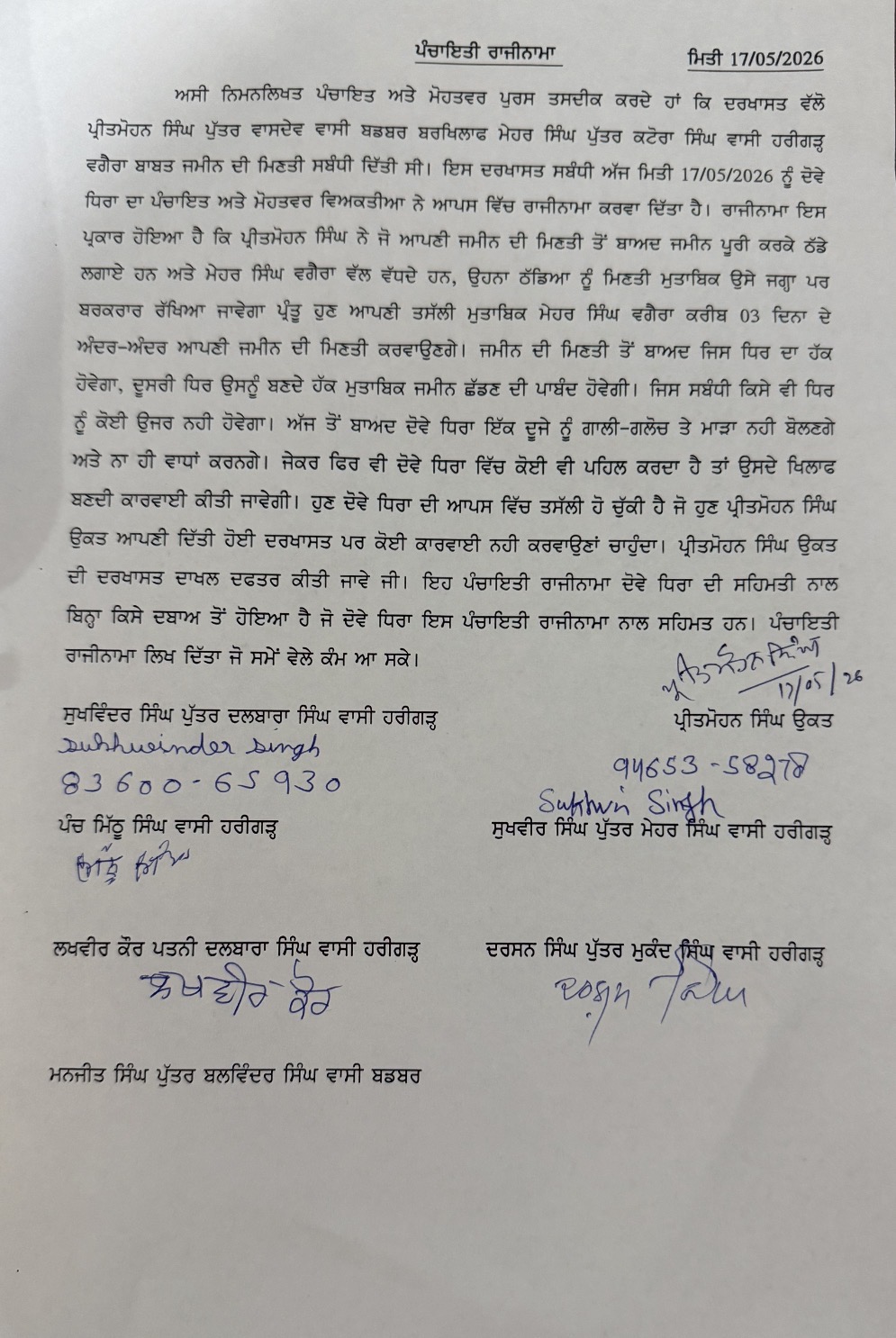
One neighboring group brought along a retired police inspector. After examining the situation, he folded his hands and stated that they were ready to return my rightful land in the office of SHO Dhanoula. A written ‘Panchayati Razinama’ was signed in the presence of witnesses in the SHO’s office in Dhanoula. Within a few days, possession of that disputed portion was handed over to me, and after many decades I finally regained control of that parcel.
The Nehri Parcel Demarcation:
The larger challenge remained on the Nehri land bordering another village named Bhure. Here, members of a Mistri family strongly disputed the measurements. They repeatedly sought additional surveys. First, they commissioned their own measurements at considerable expense. The results matched the government survey exactly. Still dissatisfied, they arranged another independent survey. Once again, the results confirmed the same boundary line.
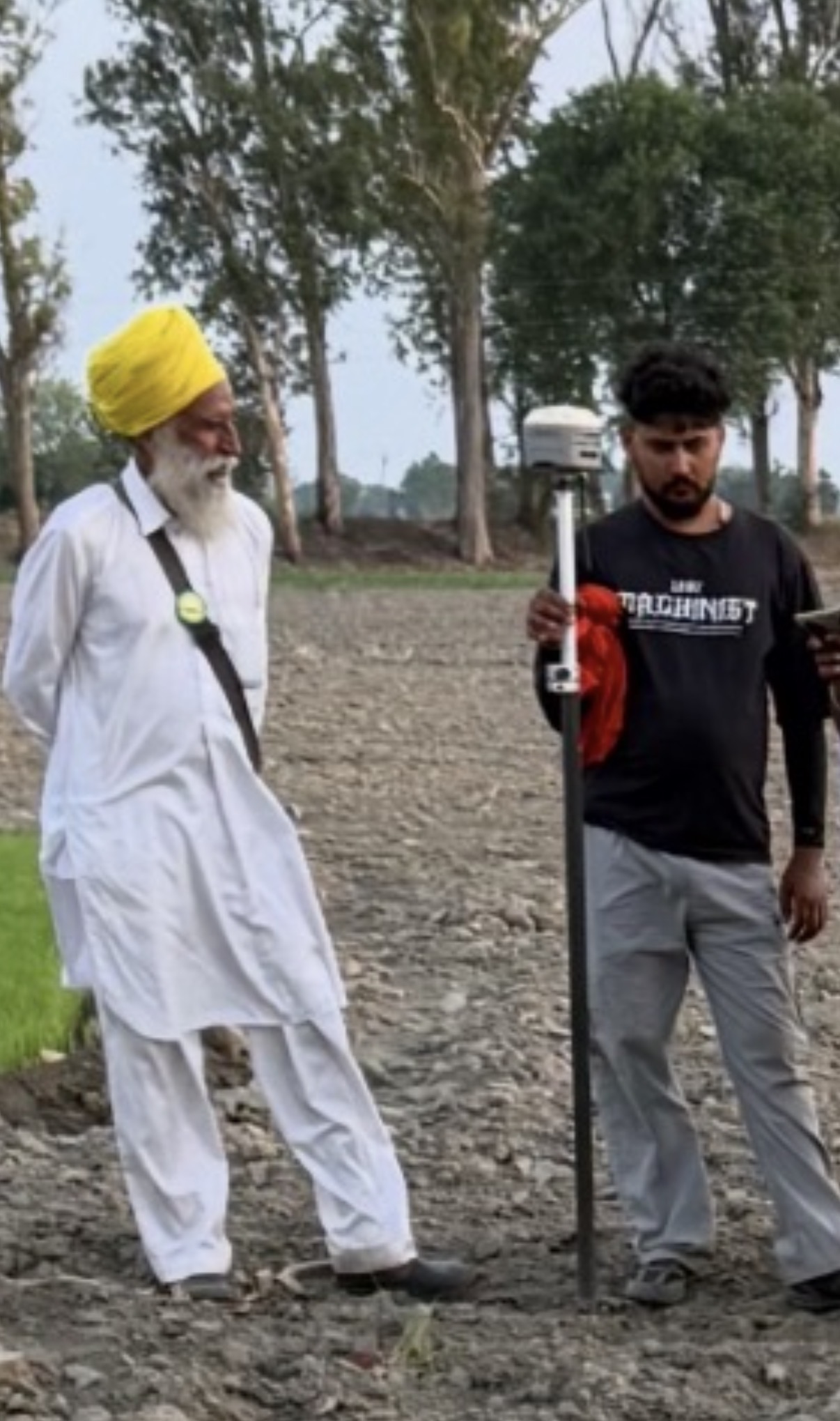
Jathedar Jwala Pardhan spends his own transport and time to help farmers to reach to an amicable solution. Next to him is a skilled person who operates GPS based Theodolite to demarcate even the minutest inch of the land. The technology has almost sorted out most of farmer’s chronic problems.
Village leaders, including representatives of the Kisan Morcha, Sarpanch, intervened and attempted to persuade them to accept reality. Every survey, every satellite reading, and every independent measurement pointed to the same conclusion.
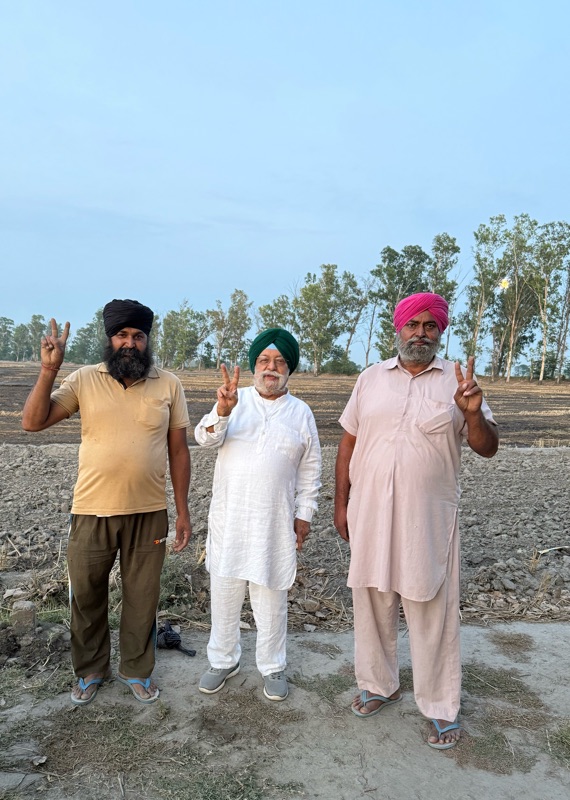
Mistri Brothers though rough and tough behaved remarkably well, however their uncle was wavering and took about turns to leave my land. As the land was given back to me, I forgave the benefits they might have got for decades. That’s is what the deal was.
What had begun as a simple request for demarcation had turned into a thirteen-year struggle involving government officials, police officers, village leaders, and multiple surveys. It required patience, persistence, and considerable financial investment.
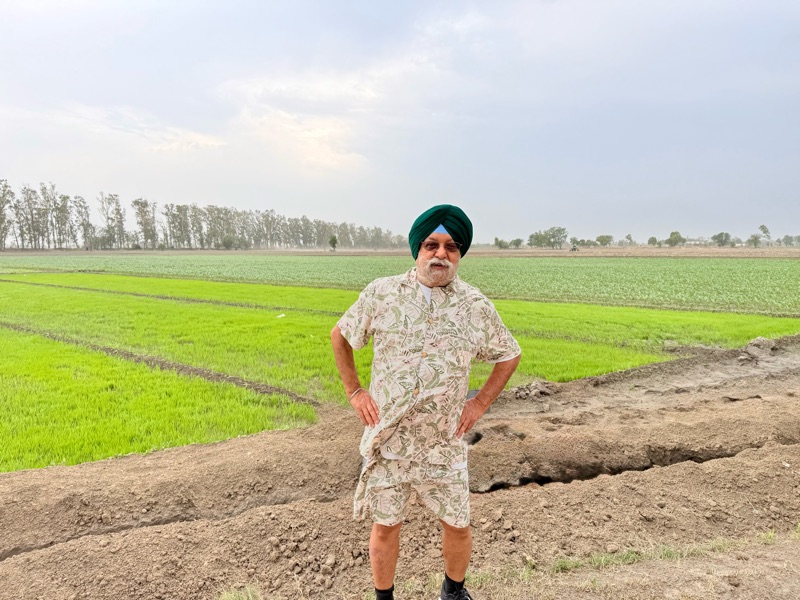
Proud Sardar had a sigh of relief.
Today, as I stand on my reclaimed land, I feel a deep sense of satisfaction. The journey was long, exhausting, and often frustrating, but it reaffirmed my faith that perseverance, lawful conduct, and community goodwill can ultimately prevail over encroachment and injustice.
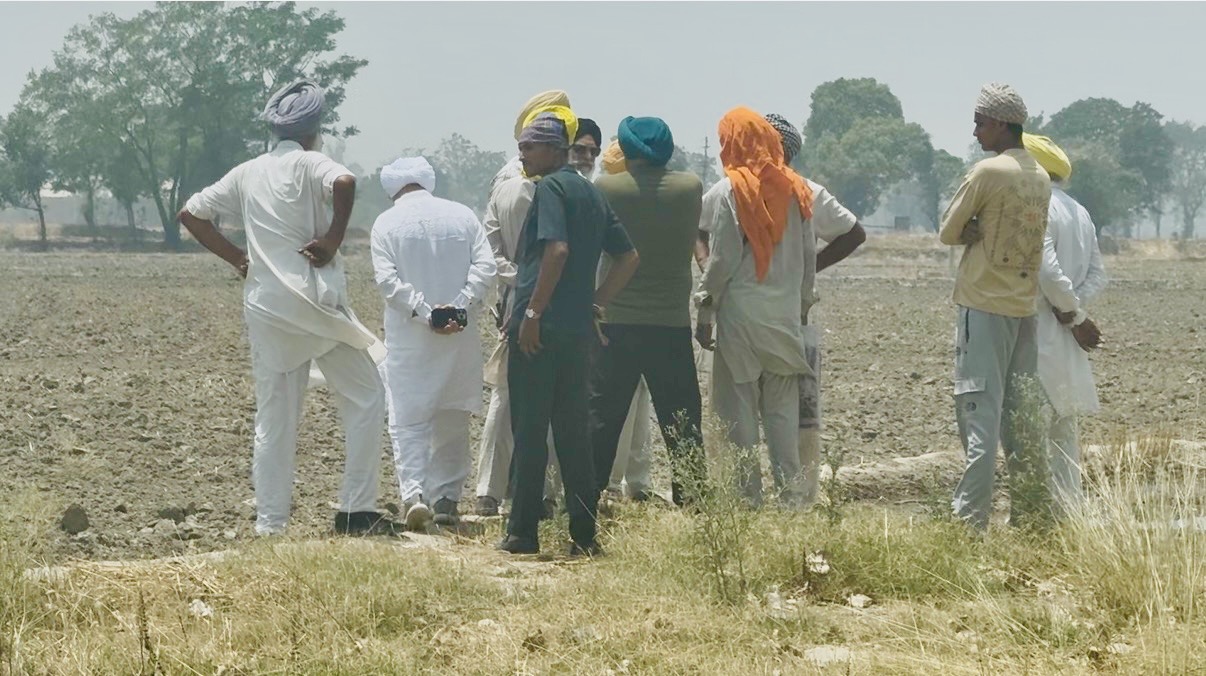
It was very hot that day with temperature hitting 114 degree F just testing your endurance and physical health. Backing me on my left is Meghraj and on my right Sunil Kumar Driver.
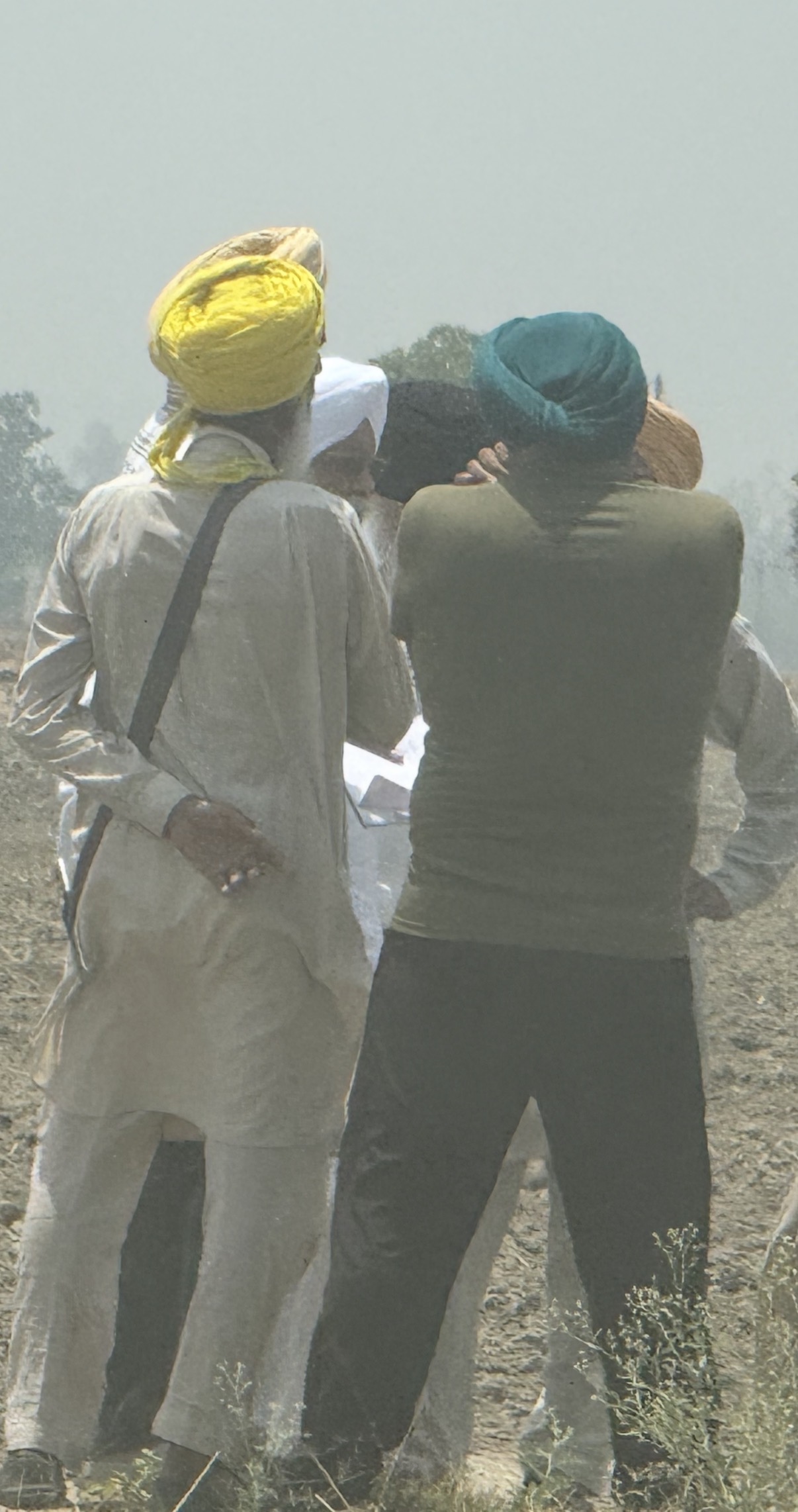
Deep discussions going through government revenue record ‘Fard’. You need to know village jugglery of words
This land was nurtured by my father, grandmother, and uncle. Reclaiming it was not merely a matter of acreage; it was a matter of preserving family heritage, honoring the efforts of previous generations, and ensuring that future generations inherit what rightfully belongs to them.
The most satisfying aspect of this entire journey was that a dispute that had lingered for decades was ultimately resolved amicably. Through patience, mutual understanding, and a little encouragement from the police authorities, the matter was settled without harsh words, hostility, or any physical confrontation. After four to five days of discussions and persuasion in hottest of weather, the neighboring farmers voluntarily handed back the portions of land that had long been under their possession.
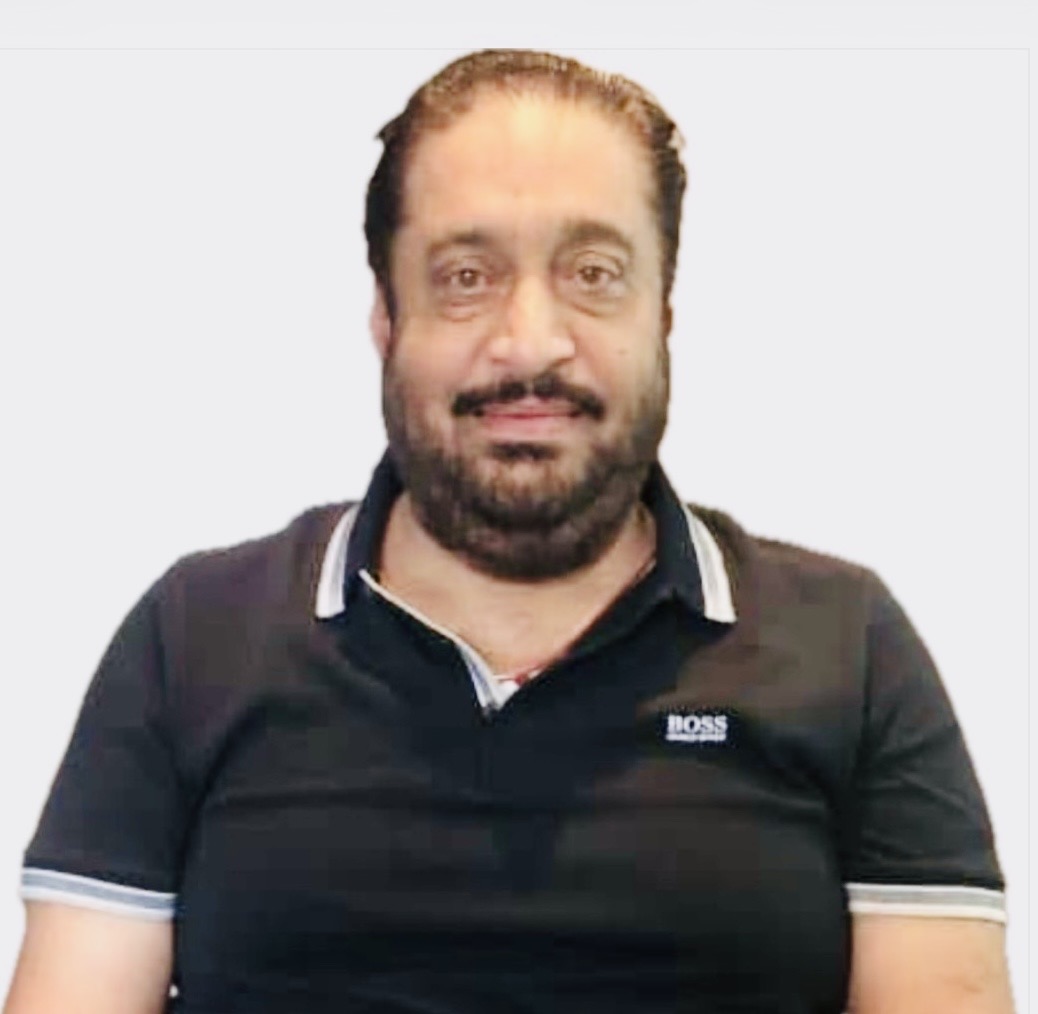 Kaku Walia who stood by me like a rock on my back
With the blessings of Waheguru, peace and goodwill prevailed over conflict. I remain deeply grateful to the police officers who extended timely assistance and acted with fairness and professionalism. I also owe a special debt of gratitude to my brother-in-law Kaku Walia , whose tireless efforts, guidance, and valuable contacts proved instrumental in bringing the matter to a successful conclusion. Their support helped transform a long-standing dispute into a peaceful and honorable settlement, for which I shall always remain thankful.
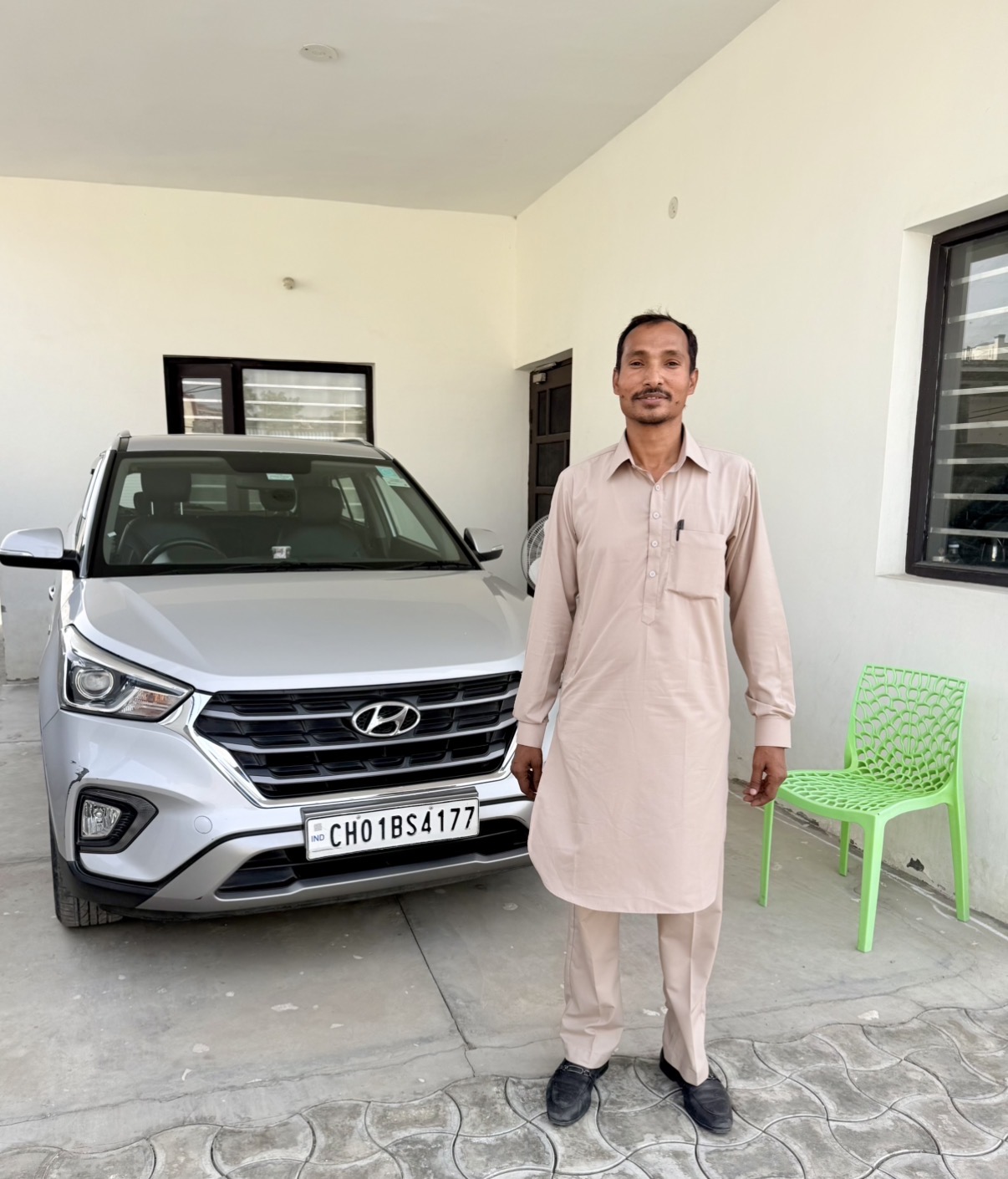
The unsung Hero, our driver Sunil Kumar who offered services as directed by Hen Harkirat veer ji and Balli Bhenji. Harvinder always asked him to shadow me among so many rough opponents and he stood tall.
Together We Triumphed!
The ultimate victory by Harvinder and me was achieved through patience, lawful means and Waheguru's blessings rather than confrontation.
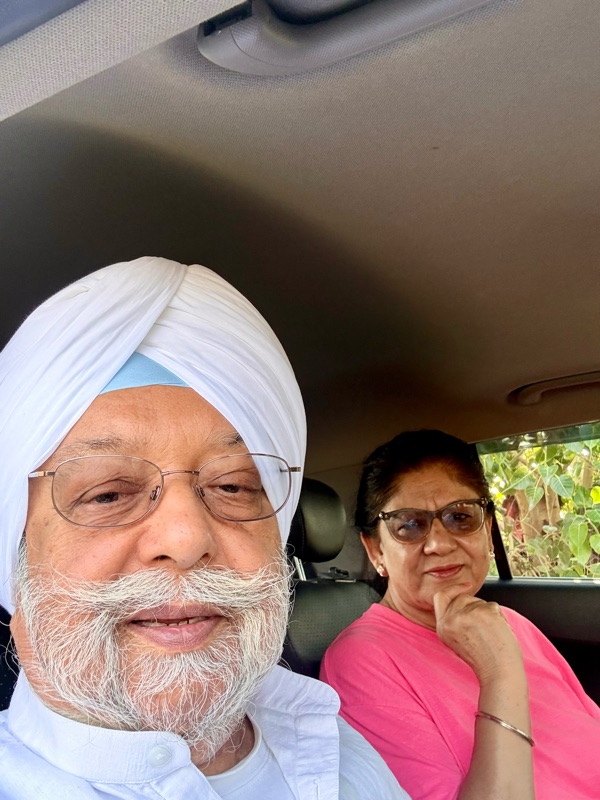
After every few minutes I will return to Car, to escape from extreme hot sun and get relief for my back pain, where Harvinder was waiting and watching over me with a hawk eye.
Throughout this long and challenging campaign, Harvinder and I stood shoulder to shoulder in our determination to reclaim our ancestral land from the rough and tough grip of encroaching neighbors. In the traditional male-dominated world of farming, it naturally fell upon me to lead the encounters, negotiations, and confrontations. However, behind every step of this journey stood Harvinder as my strongest pillar of support.
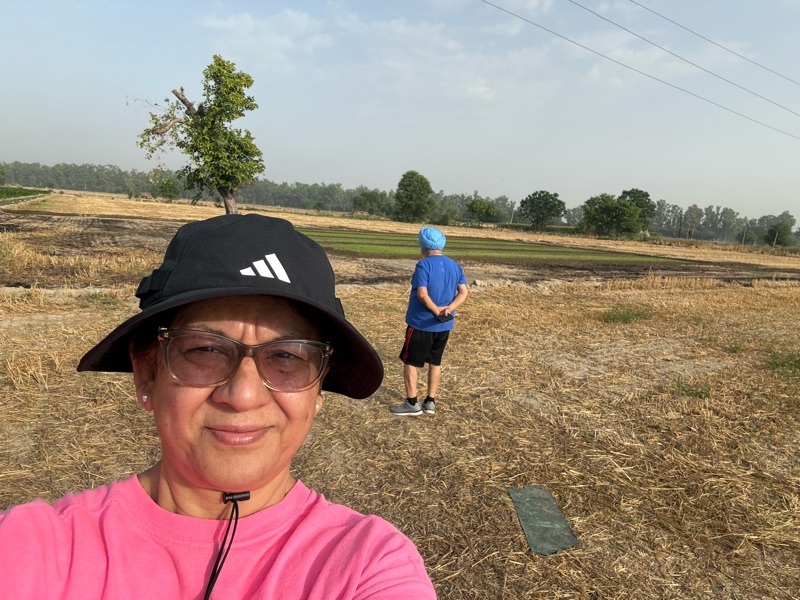 Harvinder covering me at my back.
From the planning stage to the final execution, she was actively involved in every decision. She provided encouragement during moments of frustration, helped strategize our next moves, and strengthened my resolve whenever obstacles seemed insurmountable. Her faith in our cause never wavered. While I may have been the visible face of the struggle, much of its success rested upon her unwavering support, wisdom, patience, and courage.
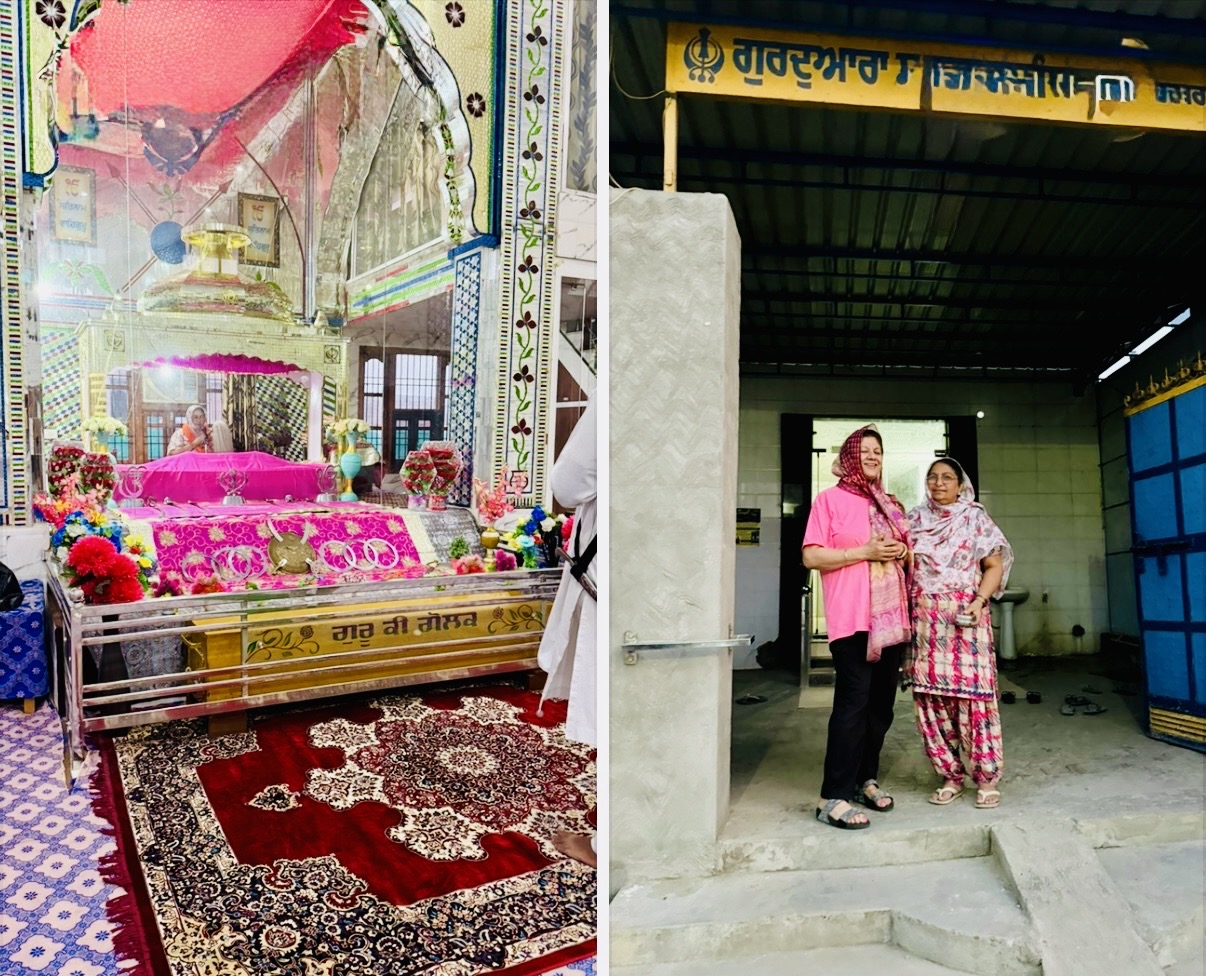
We visited very beautifully decorated local Gurdwara Sahib in village for thanksgiving. Harvinder made an instant friend - amazingly affectionate co-villager who repeatedly forced us to her grand place. We plan to visit her next time to reciprocate her friendship. and show her the pic she was longing for.
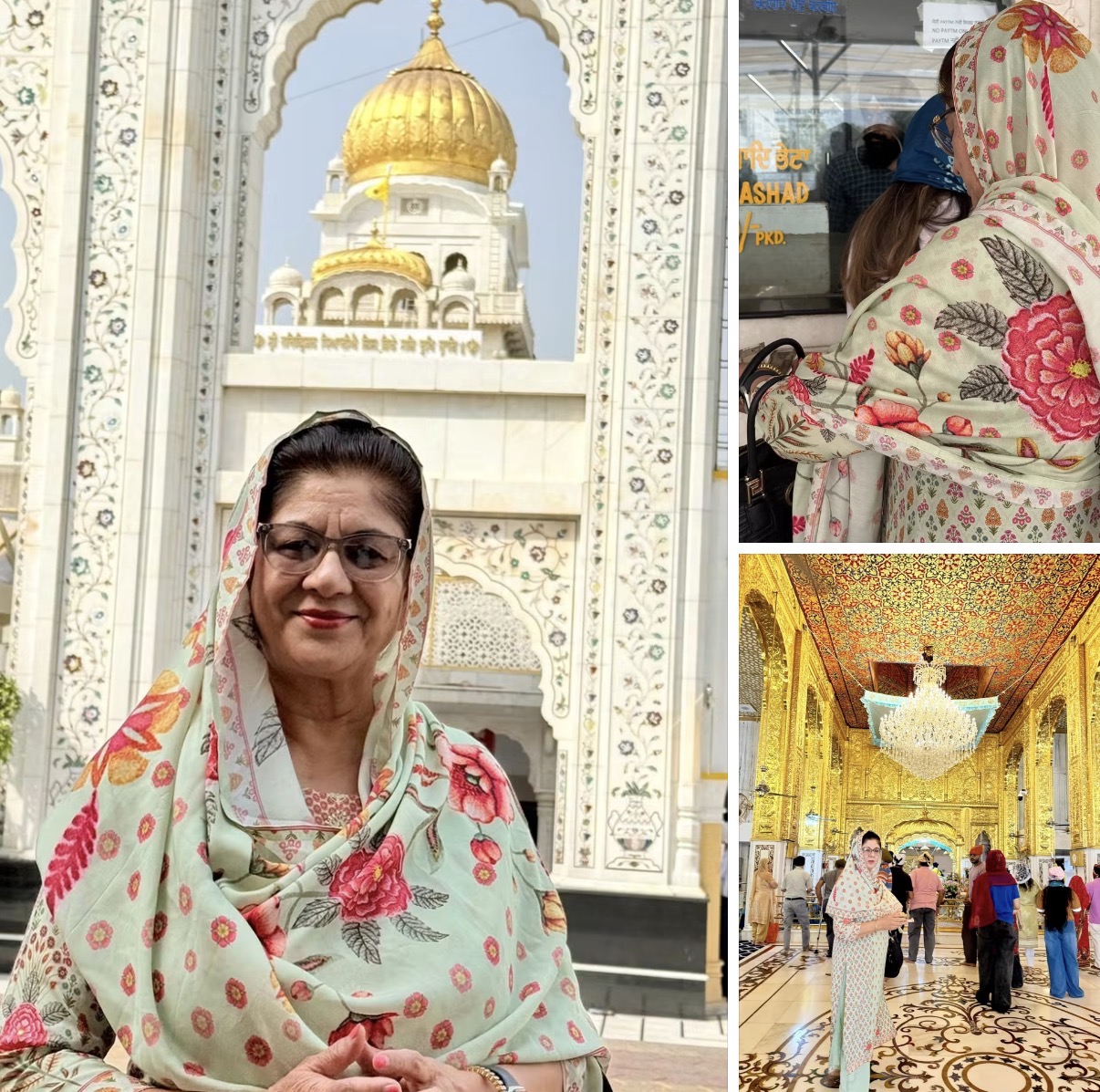
Finally our heartfull and emotional thanks to Waheguru ji for always being Ang-Sang during our tough campaign. Which could be better place than Sri Bangla Sahib Gurdwara where we both went for blessings immediately after our Anand Karaj 54 years ago.
Looking back, I can say with complete honesty that without Harvinder standing beside me throughout this arduous journey, this mission would have been far more difficult, and perhaps impossible to achieve.
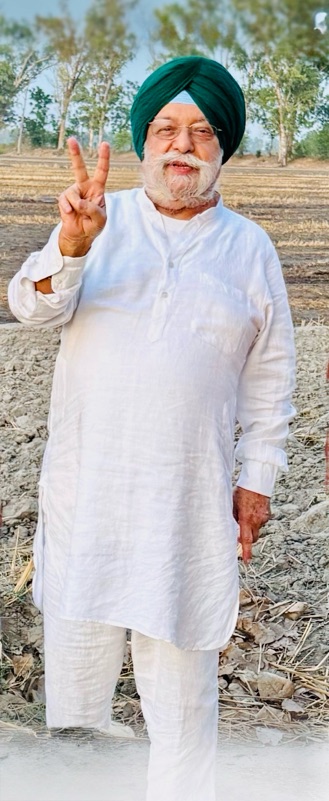
The victory was not mine alone, it was ours. God help those who work.
.
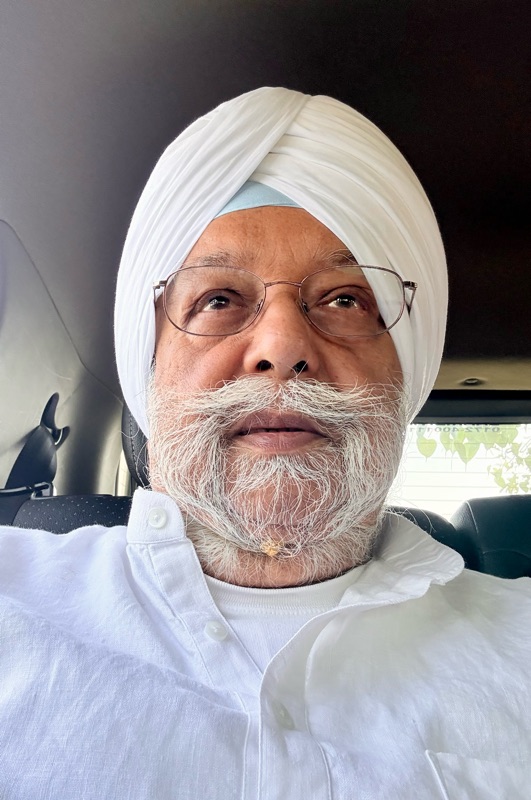 S Preetmohan Singh is proud to be Sikh


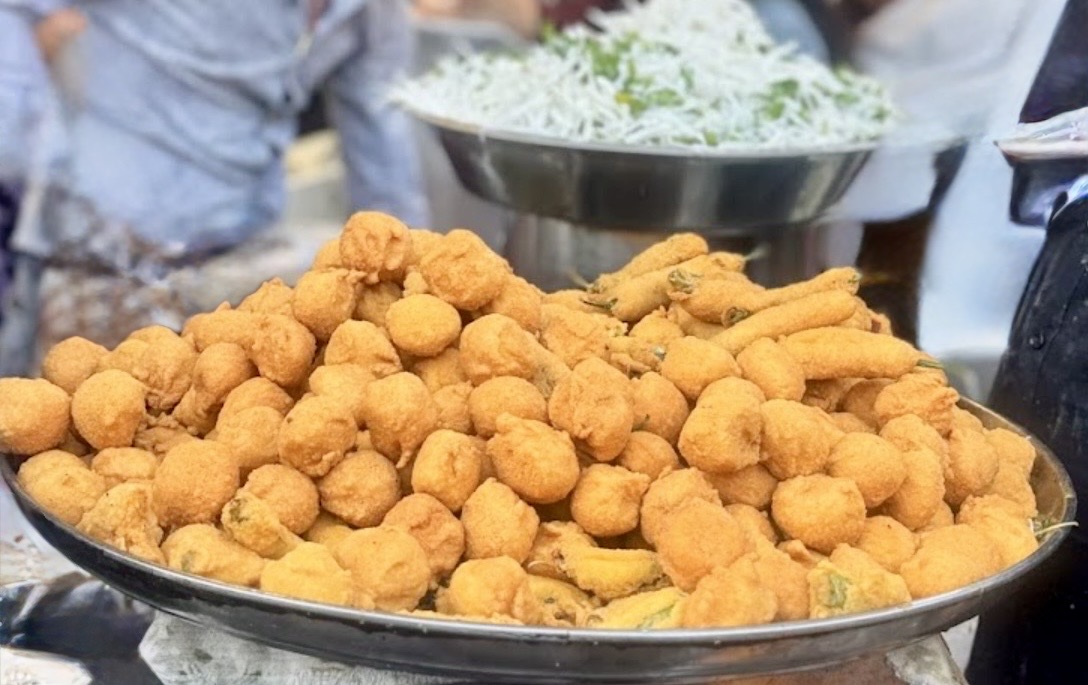
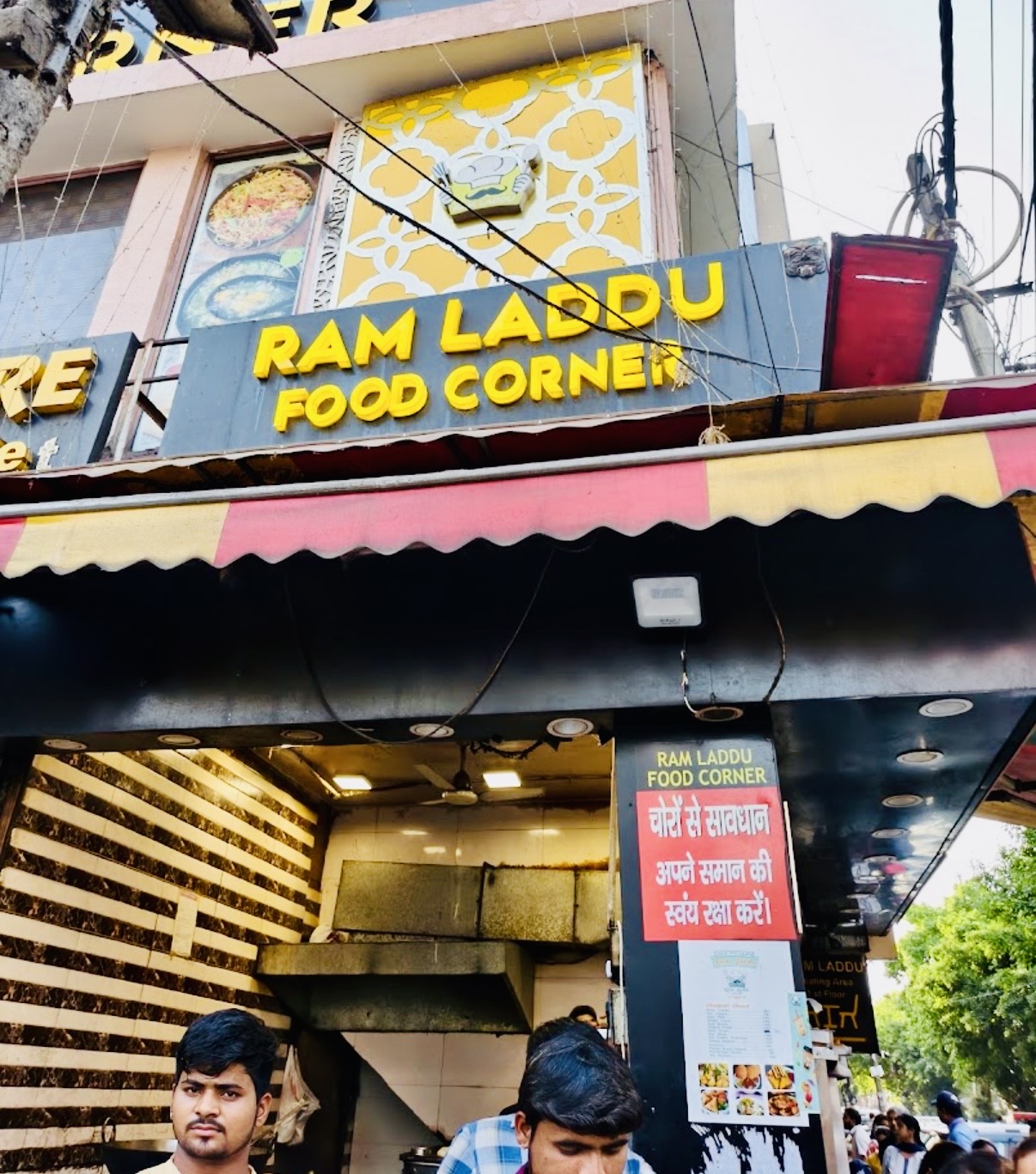 There is a huge Food corner well advertised in the heart of Central Market Lajpat Nagar.
 Overjoyed happiness is lit large on our faces when receiving Leaf bowls filled with piping hot and freshly prepared Ram Ladoos,