Our Khatri Ancestors of Aghapura, Multan
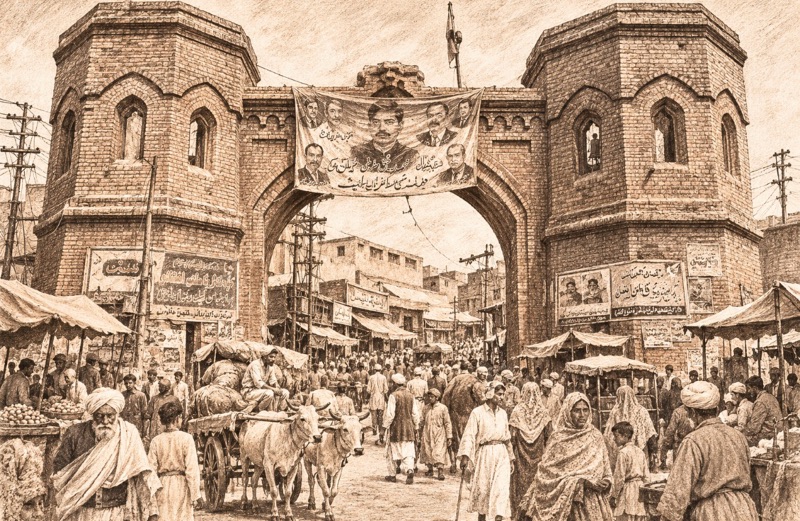
The Gate way to Mohalla Aghapura - Delhi Gate Multan.
The Family of Bhai Nand Lal Ji ‘Goya’ — As I Learned Its History from My Elders
Throughout my life, I have learned much about our family history from my ancestors and elderly relatives. Some of these traditions go back several centuries, to the time of our illustrious ancestor, Bhai Nand Lal Ji ‘Goya’, the celebrated Persian poet and devoted disciple of Guru Gobind Singh Ji.
The Three Khatri Communities of Aghapura
According to the oral traditions passed down in our family, there were three principal groups of Khatris living in our ancestral Mohalla Aghapura in Multan. They were known as:
1. Jinjoge
2. Kaan, or Kan or Kahn
3. Durarh (Bhai Nand Lal descendants)
All three belonged to the broader Khatri community. These were the names by which our families recognized one another, rather than the surnames Kapoor, Khanna, and others that became common after Partition.
Our own family, descended from Bhai Nand Lal Ji, belonged to the Durud branch.
How Aghapura Came into Existence
Our family tradition maintains that Bhai Nand Lal Ji acquired land outside Delhi Darwaza, one of the historic gates of Multan, and established his residence there.
Being a respected elder and prominent figure, he was affectionately associated with the title Agha. According to our family account, the locality subsequently became known as Aghapura.
Over the generations, the settlement grew into a neighborhood associated with our extended Khatri families.
The ancestral house of Bhai Nand Lal Ji remained particularly significant to us. It was in this very house that both Roop, my sister Bhagwant and I were born. You might be aware Bhai Nand Lal served as Dewan ( chief Secretary) of Multan for 20+ years. He married a local Khatri girl with tilt to Sikhism and himself met Guru Gobind Singh is all very well known.
Some Bhatras low lying castes were also living along with us. Only during Singh Sabha movement in 1925/26, we about 20-25 kids turned to present farm of Sikhs with turbans. Vasdev to Vasdev Singh, Inderjit to Inderjit Singh and Jai Chand to Jai Singh were thus created during this ‘Bhuchangi’ movement of Singh Sabha, While Mahesh and Arjun started Sikhs.
But all of us were Sikhs mostly Sehaj Dhari and worshipped in a Dharamshal (Gurdwara).
Partition changed everything. Those married with in the family remained Sikhs like ( Chacha Ji and Prem Chachi Ji), the others married outside mingled with adopted religion but truly believed in Sikh values.
Thus, Aghapura was not merely a place where our ancestors had once lived. It was our birthplace and a living connection with our family history.
Our Family’s Association with the Nawab of Bahawalpur
Another important aspect of our family history was the association of several of our ancestors with the princely state of Bahawalpur.
The Nawab of Bahawalpur was among the wealthiest and most influential rulers of princely India. Their financial resources and political importance became especially significant during the creation of Pakistan in 1947. The Nawab on the request of Mohammad Ali Jinah spent the expenditure of full month of newly formed Pakistan till the agreed funds were recieved from New Delhi.
I learned from my elders that several members of our family served the Bahawalpur administration, including in important military and financial positions.
One of our ancestors held a particularly responsible position connected with the Toshakhana, or state treasury. Or Finance Minister In family recollections, his position was comparable to that of a chief treasurer or senior financial administrator.
He enjoyed such close confidence of the Nawab that, on one occasion, the Nawab wished to take him along on his pilgrimage to Mecca for Hajj as per famed Sikh historian Prof Ganda Singh
An application was reportedly made to the British Indian authorities in Delhi to obtain the necessary permission and documentation. According to our family tradition, permission was refused because our ancestor was a Hindu. Consequently, he could not accompany the Nawab.
I regard this incident as an interesting illustration of the trust and personal relationship that existed between the Nawab and our ancestor, irrespective of their different religious backgrounds.
Why Our Neighborhood Was Called ‘Gali Captaina’ and is still named so.
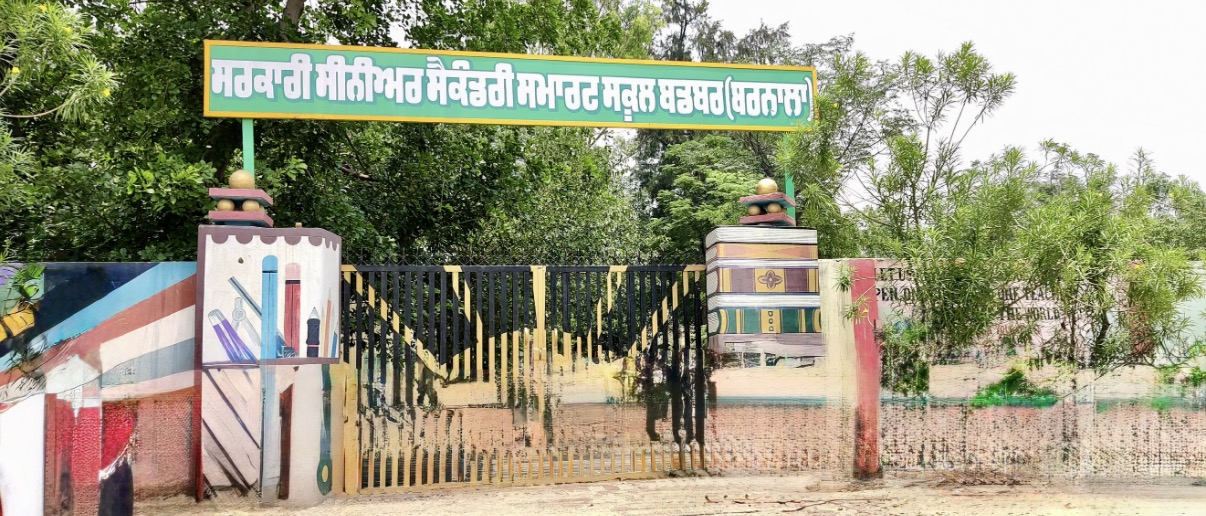
High School in Badbar which is nursing ground for Volleyball budding players in the state of Punjab.
Mostly they served in Administration and had big landholdings in Muzafargarh and Multan. In liew of the land owning families were alotted 800 Acres in village Badbar Distt Barnala. They are presently known as Multani Sardars.
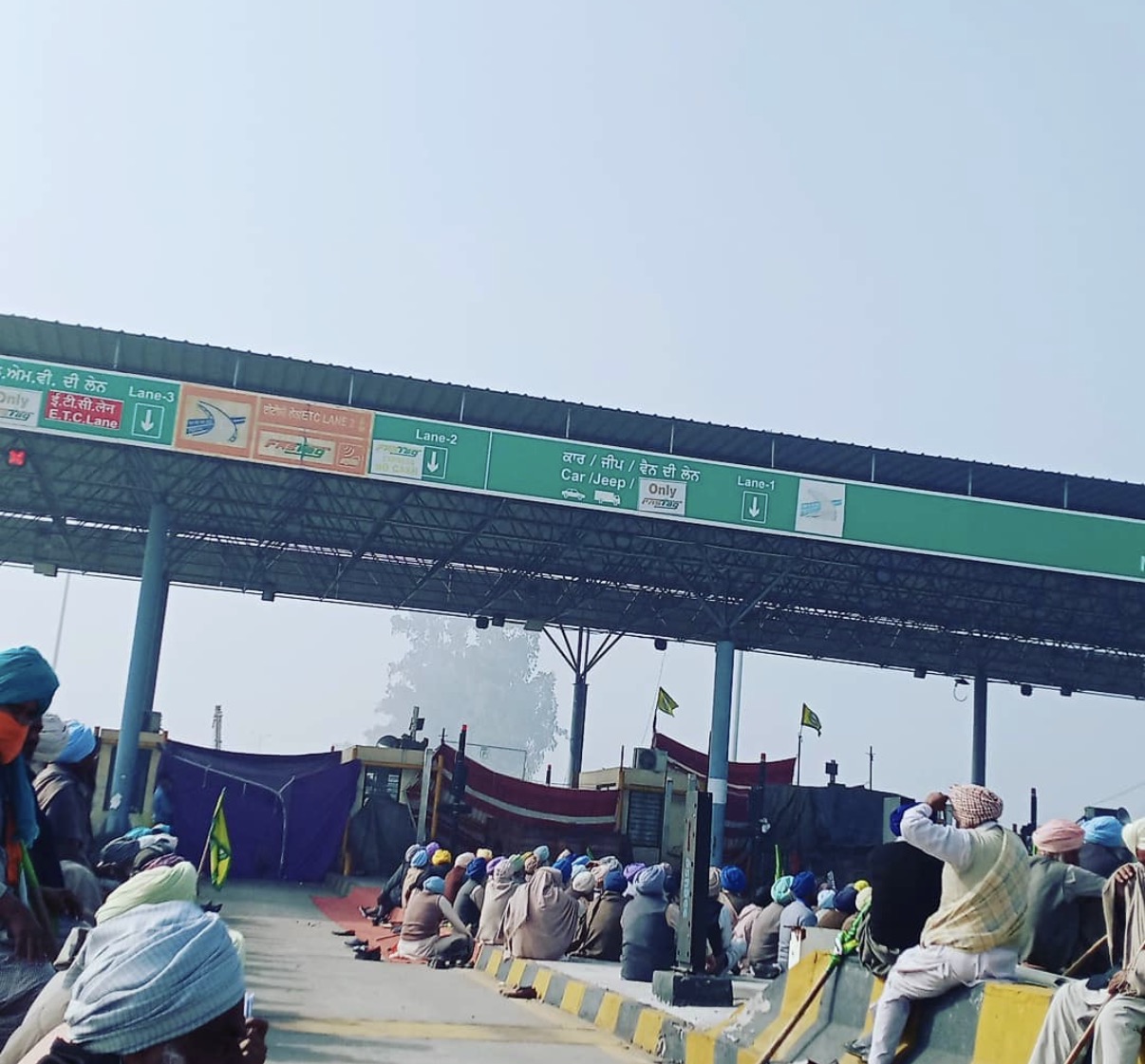
The toll Plaza Badbar sits at the tip of my farms, when the farmers gathered here to protest against the Farm laws.
Although our family was not particularly wealthy in later generations, our ancestors had enjoyed considerable standing because of their service in the Bahawalpur establishment.
Our locality was also remembered by names such as Captainawala Mohalla reflecting the military associations of our family.
This was an identity by which people recognized us, even though we did not traditionally attach modern surnames to our personal names.
How Kapoor and Khanna Became Family Surnames
One of the most interesting things I learned from my elders concerns the adoption of surnames after the Partition of India.
Before 1947, our families generally identified themselves through their traditional Khatri group names, their ancestral neighborhood, and their family relationships.
After Partition, our extended families were scattered across different parts of India, particularly Patiala, Amritsar, Delhi, Faridkot and other towns of Punjab.
As families rebuilt their lives, many adopted surnames that were more widely recognized in their new surroundings.
According to our family recollections, some members of the Kaan community adopted the surname Khanna. Among the Jinjogi families, some adopted Kapoor, while others chose Khanna.
These changes were not necessarily the result of any formal collective decision. Rather, different branches adopted surnames according to their own preferences and circumstances.
Our family eventually became known by the surname Kapoor, although our ancestral branch had traditionally been identified as Durarh
Our Identity Beyond Surnames
What I find particularly significant is that, despite these changes, our ancestors remained connected through their common Khatri heritage, their neighborhood in Multan, and their shared family history.
Our original identities were not necessarily defined by the surnames that later became attached to us.
For me, the name Kapoor is part of our more recent family identity, while Durarh and Aghapura connect us to an older chapter of our history.
And above all stands our ancestral association with Bhai Nand Lal Ji ‘Goya’, whose legacy of scholarship, poetry, devotion, and service has remained a source of inspiration for our family.
I have written these recollections as they were passed down to me by my elders. They deserve to be preserved for future generations, even as we continue to search for historical records that might confirm and enrich them.
This is my observation and I may not be fully right.


No comments:
Post a Comment