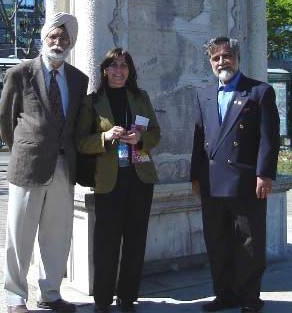
Harvinder and me proudly pose in front of KaramVas
I demolished our old house in Badbar, Punjab, due to its deteriorating condition and the emotional toll it took on me.
Baggi is welcomed
It had been the home of our grandmother and father for decades. During the COVID period, our farm manager took on the construction project, and we used heavy machinery like JCBs, tractors, and dumpers to level the ground. Heavy machinery helped to counter abundant poisonous creatures.
Mid time inspection
One part of the land was about 4 ft lower, and we brought in 25 trolleys of earth to make the plot at even level.
Surrounded by cousin houses.
Badbar roads with modern paver look clean
Finally on 10th Oct we reached KaramVas to thank Waheguru ji blessing a dwelling near my farms.
Harvinder decorated the house with childhood toys of Shiv. Both of these toys were gifted by his Nana ji and Nani ji who brought them from USA.
The small red bricks have been used a highlighted.
I used the same old small bricks (about 200 years old) to highlight the front and the living room to keep us reminding our heritage.
As we wait to open the lock and enter.
The car entering the Porch specially designed for car or tractor indoor parking.
BIL Baggi is aghast how quickly our help came to unlock the gate lock
Thorough inspection by Harvi and Baggi
A bed set with side tables and a steel wardrobe is in place
Going for inspection of loft for kids and terrace outside
Harvi likes the terrace with cool breeze blowing with unpolluted ambience
A walk way for evening tea
We intend to install a steel railing with glass to felicitate use of stairs.
Wardrobe with a safe box
Living room
Kitchenet
The island to be used as standing dinning
View of village from terrace
The veranda
Entry from Porch
Kitchen view
Our rental car
Our bed room
Bath with shower
Another view
Front yard
Iron area
Second Bath room
Baggi basking in the sun in the front yard
Harvi and Baggi happy together
I also join the party
Sukha the artist our plumber and electrician with a new curtain behind
Driver Gurpreet Singh
Street in the
Baggi enjoying bed which came a day late
Engraved doors
New curtains with decorated rod ends
It was like a significant and meaningful project to rebuild our old house in Badbar, Punjab. The support of our farm manager and the use of heavy machinery made the process more manageable. It took about two years to complete as the skilled as well as the unskilled labor is only available during non crop period. I hope our new house KaramVas brings comfort and joy to us and our future generations in the future.
The word has spread about ‘KaramVas’ among my farmer cousins who may also plunge into such a venture so old glory of family get-together after dinner rehappens in the village as we get tired of city life.
Thanks Waheguru ji for your ultimate blessings on our family for accomplishing the task of building an abode in our ancestors property. Today I felt that my Grandma and Dad have returned to this place
THE INSCRIPTION IN ISTANBUL (TURKEY) WRONGLY ATTRIBUTED TO GURU NANAK
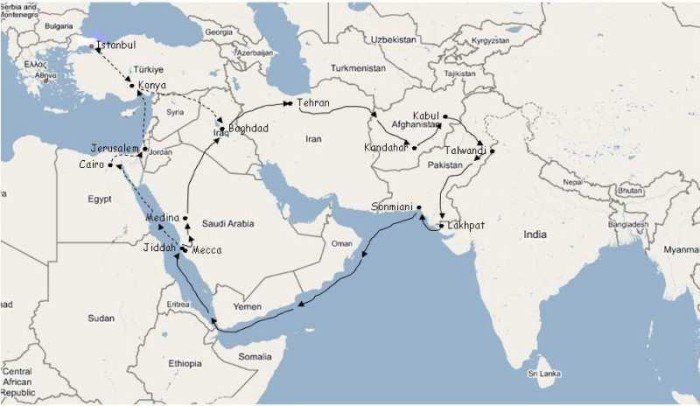
My interest in Sikh and Punjab history takes me to number of books and journals written by eminent historians. In last few years there have been reports on Sikh websites and in Punjabi newspapers regarding Guru Nanak's visit beyond Makkah (Mecca) and Baghdad. Sadly most of them are based on anecdotal evidence however one of them stands out. It has compelling evidence and researched very aptly by Professor Devinder Singh Chahal (Retired Prof of Microbiology) of Institute of Understanding Sikhism, Quebec, Canada.
Guru Nanak's visit to Turkey based on inscriptions found in its capital Istanbul got me much enthusiastic and I started reading material about it. All Sikh websites are unanimous that Guru Nanak visited Turkey based on Prof Chahal's research journal published in 2006. I was able to find couple of other journals published after 2006 by Prof Chahal on the subject which clarified every query I had on the subject. Interestingly these journals have been ignored by Sikh websites.
Inscription found in 1994
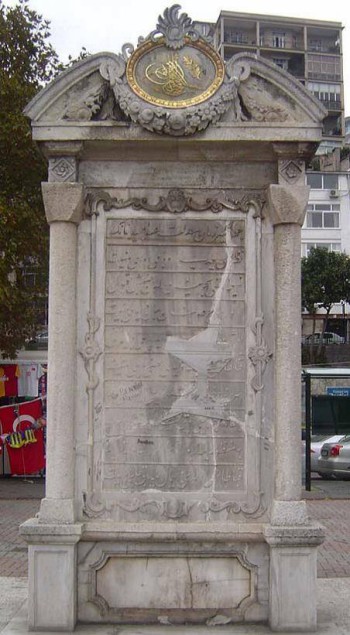
Prof Chahal writes that in 1994 while attending a conference in Turkey, he found a moment 15 X 6 feet wide, constructed of mortar, situated in a public park at the shore of the Straits of Bosporus towards Istanbul. The inscription was in Arabic/Persian script and he was able to read 'Nanak' at the end of first line of inscription. The bulk of the inscription was not legible due to weathering affects and also the cracks which were filled with cement. He took a picture of it from his camera. When he came back to Canada he consulted couple of people but they were unable to help him in deciphering the inscription. It may be mentioned here that Turkey replaced their Turkish- Ottoman (Arabic/Persian) script to Latin in 1926. This may explain the difficulty in deciphering the script which is no longer in current usage except among few academic circles.
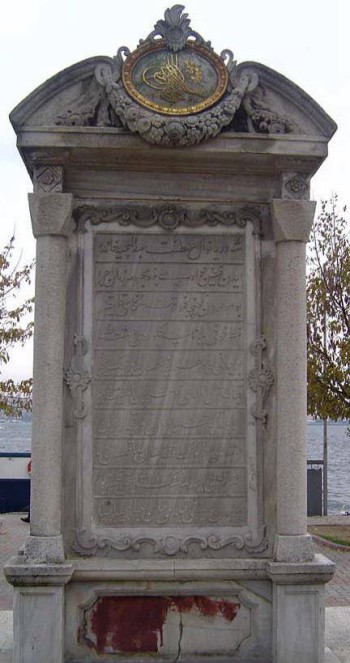
(Left) Inscription found in 1994 and (Right) Inscription found in 2007 - reverse of the picture on the left.
Initial decipher of Inscription in 2006
The research remained dormant for 12 years till Prof Chahal attended the International Conference on Guru Nanak Heritage for Peace on February 2006. At the conference, Iqbal Kaiser, author of the famous book 'Sikh Shrines in Pakistan' and Syed Afzal Haider, Senior Advocate of Supreme Court in Pakistan and author of the book 'Baba Nanak' helped Prof Chahal to decipher the first line of the inscription which was in Turkish language.
(Transliterated and translated in Gurmukhi & English)
ਜਹਾਂਗੀਰ ਜਮਾਂ ਹਿੰਦ ਲਤ ਅਬਦ ਅਲ ਮਾਜੀਦ ਨਾਨਕ । (Jehangir jaman hind lat abd al majid Nanak)
ਜਮਾਨੇਦਾ ਮਾਲਕ, ਹਿੰਦ ਦਾ ਬੰਦਾ,ਰਬ ਦਾ ਨਾਨਕ । (jamanay-da malik, hind dabanda, rab da Nanak) The Lord of the time, resident of India, Nanak the man of God.
Following his return to Canada, Prof Chahal wrote a journal article 'Monument of Guru Nanak in Istanbul, Turkey, a new discovery' which was published in 'Understanding Sikhism, the Research Journal' in October 2006. This remarkable discovery was widely published and reported in newspapers in Punjab and on Sikh websites.
Visit to Turkey in 2007
After raising some funds, Prof Chahal and Dr Avtar Singh Dhaliwal, set out during May 2007 on a project to prove if the word 'Nanak' in the inscription on a monument discovered in 1994 on the shore of Straits of Bosporus, Istanbul, Turkey, where the East meets the West, is for Guru Nanak or it is something else.
Monument relocated
The team of Prof Chahal and Dr Dhaliwal were able to find the monument which was relocated at the seashore of European side at Iskelesi Kabatas near a Mosque and Dolmabahce Palace. The relocation indicated some inscription on the back of the monument which was much clearer.
Final decipher of the inscription
The inscription was deciphered as one made by Emperor Abdul Majeed Khan in 1850 who ruled Ottoman Empire from 1839-61. Later further research by the team and other researchers deciphered that the word 'Nanak' is in fact KHANIK[N] in which the hook of Arabic alphabet 'Khey' was damaged due to weathering agencies thus everybody who looked at it was reading that word as 'Nanak'.
The word KHANIK[N] means "of Khan". This conclusion was accepted after consulting many experts of the Faculty of Divinity of Marmara University and the Department of Archaeology of Istanbul. Prof Chahal wrote that the Department of Archaeology told them that during Ottoman Empire no monument could be constructed of any person other than that of Emperor. Therefore, the possibility of this monument for Guru Nanak is next to impossible. Similarly, their research could not find any clue about the visit of Guru Nanak to the shrine of Mevlana (Maulana) Jalaluddin Rumi in Konya.
Research on other references
The team went to Research Centre for Islamic Studies, the biggest in the country and tried to find a reference given by Tarlochan Singh in his book Guru Nanak: Founder of Sikhism published by Gurdwara Parbandak Committee, Sis Ganj, Delhi in 1969. In this book the author had given a reference and indicated that Guru Nanak met Emperor of Rum, Salim (1511-20) at Cairo or Istanbul. Tarlochan Singh had quoted 'Sydney Nettleton Fisher: The Middle East: A History. p 206 39 JMS (LI) 281'. The above reference was found to be partially incorrect. No journal of this nature existed however a book 'The Middle East: A History' by Sydney Nettleton Fisher published in 1979 was found. The portion dealing with Emperor Salim Khan did not contain anything about Guru Nanak in the book.
Prof Chahal laments that how much time is wasted to find out incomplete references which are common practice among some Sikh scholars.
Achievement of the Project
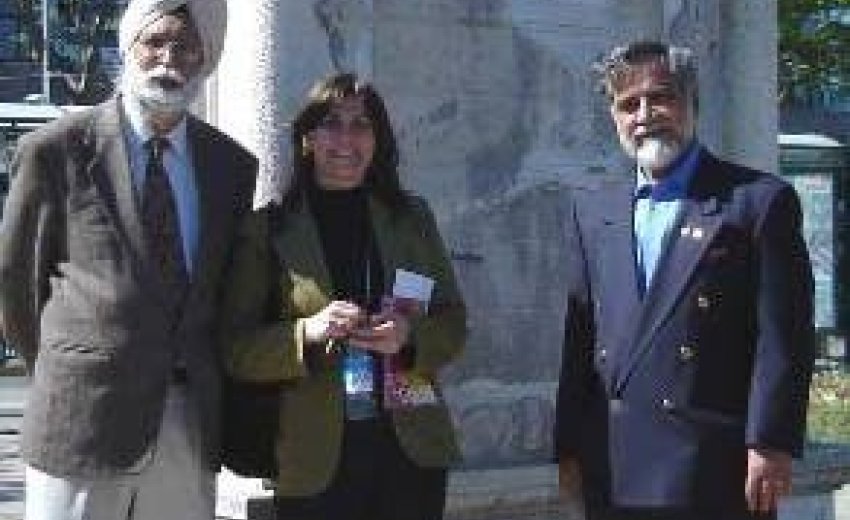
Dr Chahal (left) with Turkish Academician and Dr. Dhaliwal
Despite not able to prove Guru Nanak's visit to Istanbul, Dr Chahal delivered a lecture on 'Guru Nanak's Concept of God and his travels in Middle East' at Universities at Istanbul and Konya. Sikhism has been introduced in Turkish Universities as one of the important religions other than Islam which was a remarkable achievement. I wish there are more people like Dr Chahal who would research their hypothesis scientifically and do away with anecdotal and conjectural stuff.
Editor's note: This article was written by Inderjeet Singh (inderjeet08@yahoo.com) strongly based on the research of Dr. Chahal Singh.
Source:
Chahal, Devinder Singh. Monument of Guru Nanak in Istanbul, Turkey, A new discovery 23rd October 2006 Understanding Sikhism - The Research Journal
Chahal, Devinder Singh. Research Project DID GURU NANAK TRAVEL UP TO ISTANBUL, TURKEY? PREAMBLE July - December 2007, Vol. 9, No 2 page 5 Understanding Sikhism - The Research Journal
Chahal, Devinder Singh & Dhaliwal, Avtar Singh. Research Report DID GURU NANAK TRAVEL UP TO ISTANBUL, TURKEY? Where East Ends & West Starts. July - December 2007, Vol. 9, No 2 page 7 - 23 Understanding Sikhism - The Research Journal
The author is a Nottingham (UK) based amateur historian with a keen interest in Punjab and Sikh history. He writes regularly for Sikhnet and runs a blog.