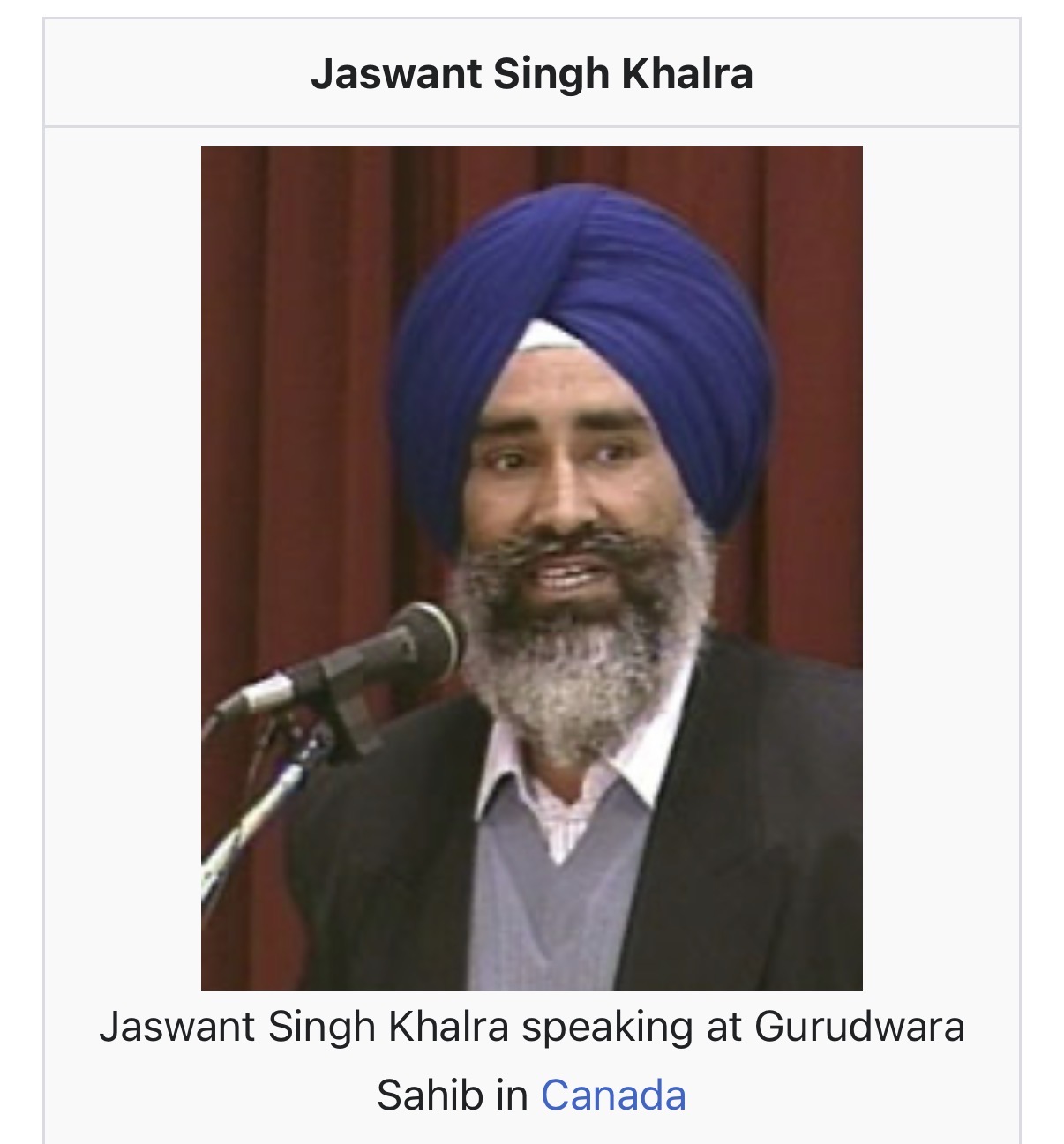
Jaswant Singh Khalra and Punjab’s Difficult Years:
A Neutral Historical Summary
For many members of my generation and especially for those of us who left India in the late 1980s or early 1990s, the events that unfolded in Punjab during those turbulent years remain only partially understood. Much of what happened became known only years later through court proceedings, official investigations, media reports, and the accounts of victims and security personnel alike.
The 1980s and early 1990s were among the darkest chapters in Punjab’s modern history. Thousands of innocent civilians, political leaders, journalists, members of the Sikh community, Hindus, government officials, and police personnel lost their lives during the years of militancy and counter-insurgency. Police officers and their families lived under constant threat, while ordinary citizens often found themselves caught between militant violence and security operations.
It was during this period that Jaswant Singh Khalra, a bank employee and human rights activist, began examining municipal cremation records. He alleged that large numbers of unidentified bodies had been secretly cremated after alleged fake police encounters. His work attracted national and international attention and raised serious questions about human rights violations during the counter-insurgency campaign.
Jaswant Singh Khalra was an Indian Sikh human rights activist who gained international recognition for investigating alleged human rights violations during Punjab’s insurgency. Through his research into municipal cremation records, he alleged that approximately 25,000 people (List published in Leading News Paper ‘Tribune’) had been illegally killed in fake police encounters and secretly cremated by the Punjab Police. He also alleged that nearly 2,000 police personnel who refused to cooperate in unlawful actions had themselves been killed. These allegations brought global attention to the issue and prompted investigations by the courts and the Central Bureau of Investigation (CBI). While many individual convictions have since resulted from CBI investigations and court proceedings, the broader figures and allegations continue to be debated and have not been conclusively established by judicial findings.
In September 1995, Khalra was abducted. He never returned, and his body has never been recovered. Following intervention by the Supreme Court of India, the case was investigated by the Central Bureau of Investigation (CBI). Several police officers were later convicted for his abduction and murder.
The CBI also investigated numerous alleged fake encounter cases. Over the years, many police personnel were convicted in individual cases after lengthy court proceedings, while some cases remain pending. These convictions reflect judicial findings in specific cases, not a blanket judgment on the conduct of the entire Punjab Police.
At the same time, many former police officers and their supporters maintain that Punjab was facing an extraordinary insurgency, that police personnel themselves suffered heavy casualties, and that many officers acted under extreme pressure while combating armed militancy. Some argue that lower-ranking officers often carried out orders issued through the chain of command and should not bear sole responsibility.
These differing perspectives continue to be debated. What is beyond dispute is that thousands of families of civilians, militants, police personnel, and public officials alike—experienced devastating loss. The conflict left deep emotional and social scars that continue to affect Punjab today.
For younger generations, it is important to understand this period through reliable historical records, judicial decisions, and multiple viewpoints rather than through political narratives alone. A mature understanding recognizes two truths simultaneously: Punjab endured a brutal insurgency that claimed many innocent lives, and the rule of law requires that any unlawful killings or human rights violations, regardless of who committed them, be investigated and addressed through the courts.
Remembering Jaswant Singh Khalra’s work is therefore not simply about one individual. It is also about the broader principles of accountability, justice, human rights, and the importance of democratic institutions. Equally, remembering the sacrifices made by thousands of police personnel, security forces, and innocent civilians reminds us of the enormous human cost of terrorism and violence.
A Continuing Legacy
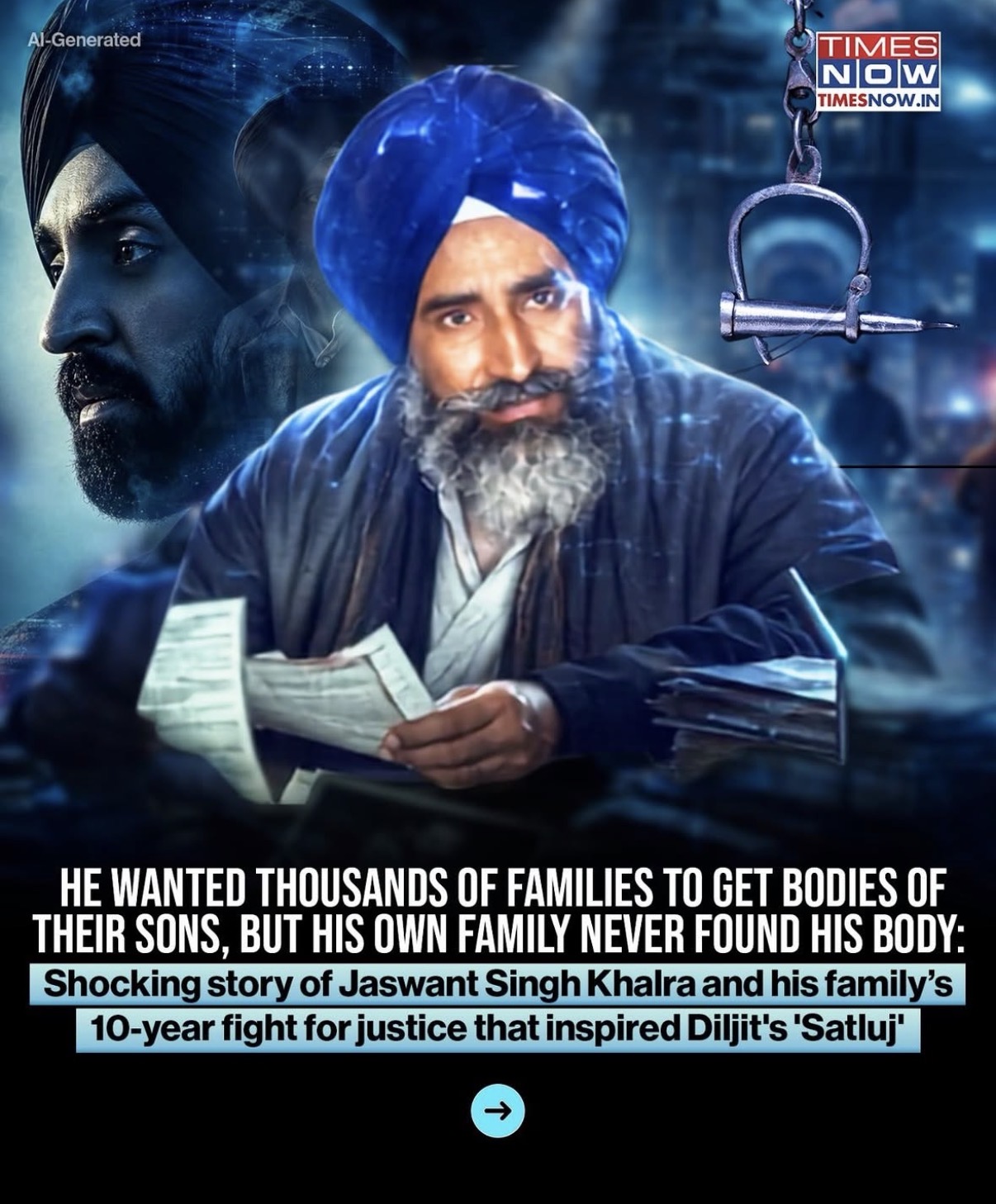
Jaswant Singh Khalra’s story continues to resonate decades after his death. A Hindi–Punjabi film based on his life, Satluj, starring Diljit Dosanjh as Khalra, was originally scheduled for release in February 2025. The film had earlier been titled Ghalughara (“Massacre”) and later Punjab ‘95. During the certification process, India’s Central Board of Film Certification reportedly sought 127 cuts and a change of title, resulting in repeated delays to its release. Eventually, the film was released on the streaming platform ZEE5 on July3, 2026, without cuts, but it was removed from the platform two days later, on July 5, 2026. The reasons surrounding its release and subsequent removal have generated renewed public discussion about Jaswant Singh Khalra’s life, his work, and the continuing importance of preserving and examining this difficult chapter of Punjab’s history.
Activism in his blood
An interesting aspect of Jaswant Singh Khalra’s background is his family’s long association with public causes and India’s freedom movement. His grandfather, Harnam Singh, was an activist in the Ghadar Movement and one of the 376 passengers aboard the Komagata Maru incident in 1914. After the ship was denied entry into Canada and forced to return to India, Harnam Singh was arrested by the British authorities, tried in the Lahore Conspiricy Case, and imprisoned in Lahore. This family legacy of activism and sacrifice forms an important part of the historical background to Jaswant Singh Khalra’s own lifelong commitment to justice and human rights.
Lasting Lesson
The lasting lesson is that a peaceful and democratic society must be able to confront both terrorism and abuses of state power. Justice, transparency, and respect for human rights strengthen public trust and help ensure that such painful chapters are never repeated.


No comments:
Post a Comment